
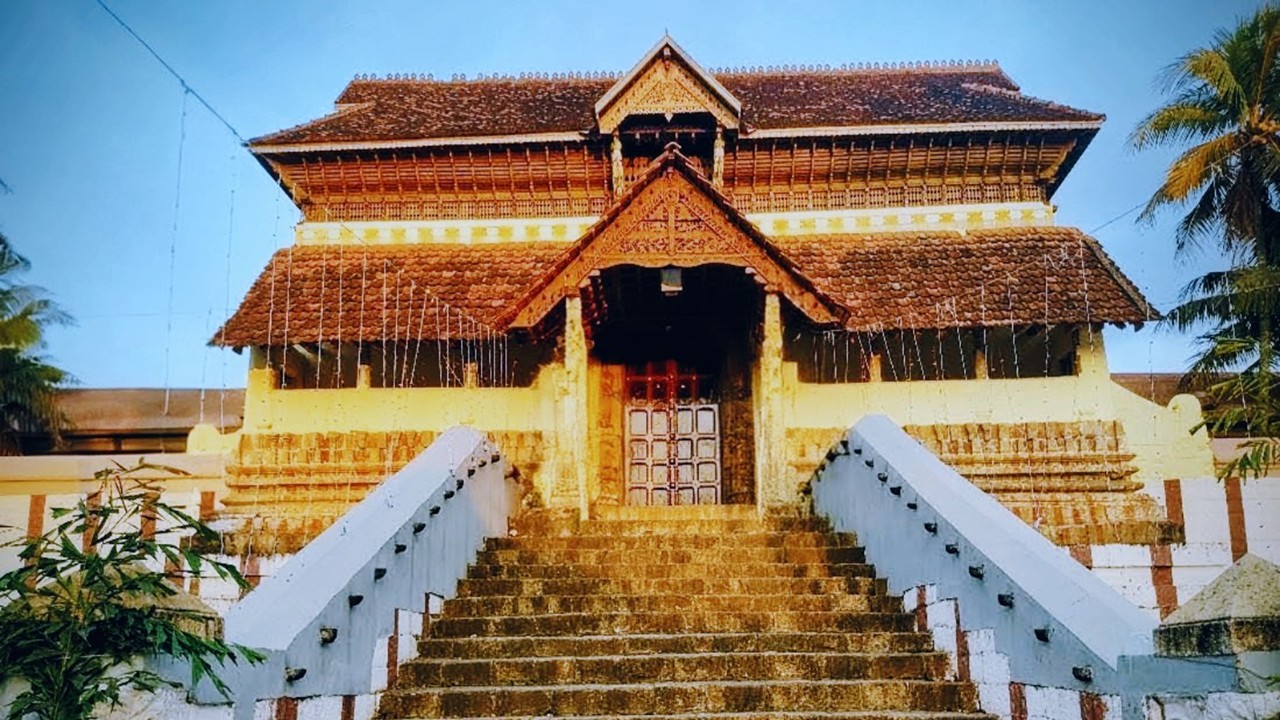
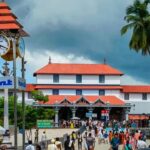
This 4000-year-old temple is known for its architectural grandeur; it is a place where serenity, nature, devotion, and faith blend in harmony.
Sri Adikeshava Perumal is considered the elder brother of Sri Padmanabha Swamy.
Adi Kesha Temple is older than the Sri Padmanabha Swamy Temple in Thiruvananthapuram. Rituals observed in this temple are similar to those followed in the Sri Padmanabha Swamy Temple.
It is located in the small, charming town of Thiruvattar in the present-day district of Kanyakumari, Tamil Nadu. This blessed land is surrounded by two rivers: Kothai, and Parali.
This ancient, renowned temple is known as “Srirangam of the Chera Kingdom”, since Lord Vishnu is seen lying in a sleeping posture, and rivers surround this divine land.
Sri Chaitanya Mahaprabhu, a prominent saint of the Vaishnava Sampradaya, visited this temple during his pilgrimage to South India in the year 1510. During his stay here, he found the 5th chapter of Brahma Samhitha. When he read Brahma Samhita, he found profound joy and went into the state of spiritual ecstasy.
Sages like Parashuraman and Vashishtha have visited this temple and offered their prayers.
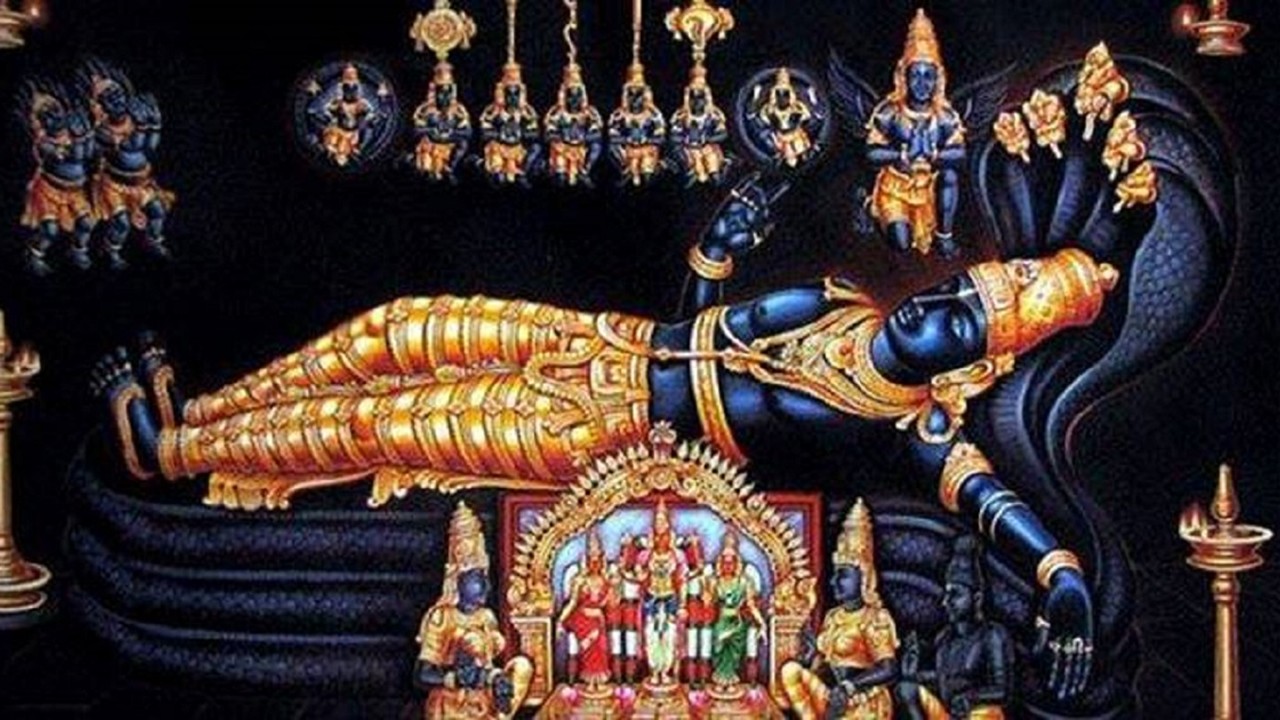
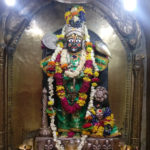
Deity of Adikeshava Temple
The Deity is so huge that it measures 22 feet in length. The most interesting thing about Lord Adi Keshava is that it is seen sleeping in opposite directions, unlike other temples. Here, the head of the Lord is facing towards the south, while the feet are facing North.
The Deity is so huge that it is not visible using a single door but can be viewed only through three doors.
The temple is known for the occurrence of a unique phenomenon. Between the 3rd and 9th day in the month of Purattasi (September-October) and Panguni (March-April), the sun’s rays fall directly on the Lord Sri Adi Keshava Perumal during sunset. It is a gesture shown by Surya Deva or Sun towards Lord Sri Adikeshava Perumal.
Architecture of Adikeshava Temple
Sri Padmanabha Swamy temple in Thiruvananthapuram is built on the model of Sri Adikeshava Temple. Here, the Tantrik puja vidhi as per the Kerala style is followed. This temple is built in such a way that it faces the direction of the Sri Padmanabha Swamy Temple in Tiruvanthapuram. That is the reason why the Deity
of Adikeshava Perumal is facing west.
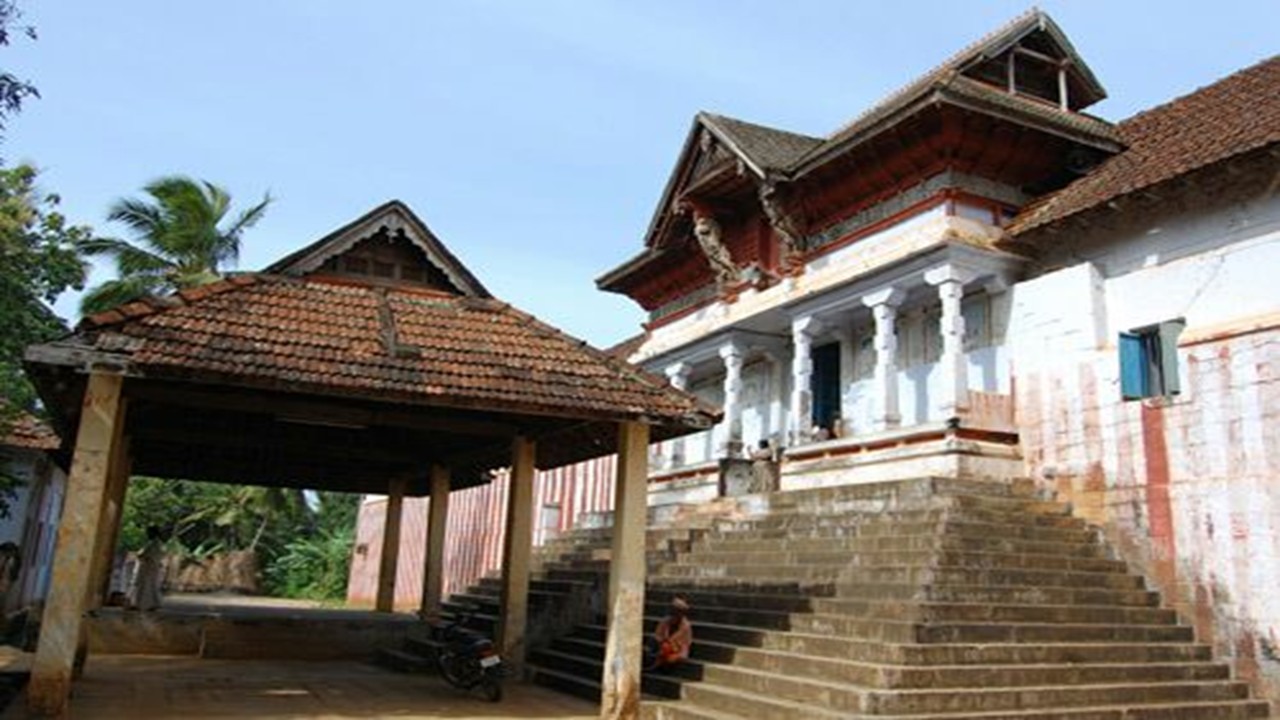
Like the other temples that use stone for construction, here in this temple, wood is used as the primary material. The roofs, pillars, and doors are mainly constructed using wood. Adapting to climatic conditions, the roofs are sloped.
Otraikal Mandapam or Ottakkal Mandapam, which is made of a single stone, is the engineering marvel of this sacred site. It measures 18 ft in width and 3 ft in height.
There are many sculptures of Deepalakshmi holding lamps in the outer prakarams, each one unique. Every sculpture features a different hairstyle, reflecting how India was a fashion hub even back then.
Sthala Purana of Adikeshava Temple
Unable to bear the torture, devas and devatas approached Lord Maha Vishnu for a solution. Lord Vishu appeared as Adikeshava, fought fiercely with the demons Kesan. Finally, after a tough fight, Lord Vishnu threw the demon, Kesan, from the mountain.
After he fell from the mountain, he became unconscious.
Adishasha came and completely coiled the demon Kesan, and Lord Narayana slept over him and covered him as a lid so that Keshan wouldn’t escape. He tried multiple ways to escape, bringing his hands out of the coiled Adishesha. Whenever he touched the ground, a hot Shivalinga emerged and burned his hand.
He tried nearly 12 times, and thus 12 Shiva Lingas emerged.
Thus, 12 Shivalayas were established surrounding the temple. These 12 famous Siva Temples are Thirumala, Thikkurussi, Thrupparappu, Thirunandhikkara, Ponmana, Pannippakam, Kalkkulam, Melankodu, Thiruvidaikkodu, Thiruvithamkode, and Thiruppanrikkode.
Keshi, with the help of her friends, took the form of a river to destroy Narayana, hoping that He would be washed away. Keshi and her friend became rivers known as Parli and Kothai.
To drown Lord Vishnu, they circled him. But Bhumi Devi, being the wife of Narayana, came to serve the Lord. She raised the level of land above ground level, making the efforts of Parli and Kothai in vain. Since the rivers flowed in a circular pattern, this place came to be known as Thiruvattar. Thus, this land became an island. That is why it is called Thiruvattar. ‘Tiru’ means holy, ‘vattam’ means round, and ‘ar’ means river.
Major Festivals Celebrated
Having the darshan of the Lord on this auspicious day fulfills all the material desires of His pure devotees. Also, the devotee will be freed from the cycle of birth and death.
Other major festivals celebrated at the Adikeshava Temple include Onam, Vishu, Navaratri, Panguni Uthiram, and Deepavali.
Darshan Timings of Adikeshava Temple
Morning: 5:00 AM to 12:00 PM
Best Time to Visit Adikeshava Temple
Nearby Places to Visit
Kanyakumari Beach: It is a famous beach, where it is a meeting point of the Arabian Sea, the Indian Ocean, and the Bay of Bengal.
Vattakottai Fort: It is a historic seaside fort located near Kanyakumari.
How to Reach Adikeshava Temple?
However, if you prefer to travel on your own, here are a few options.
By Air: Thiruvananthapuram International Airport is the nearest airport to reach Thiruvattar. It is located just 80 km away from the temple. From here, you can hire a taxi, cab, or autorickshaw to reach the destination. Also, there are private and government buses that are available to reach the temple.
By Railway: Nagercoil Junction (15 km) and Kanyakumari Railway Station (30 km) are the two nearest railway stations that can be accessed to reach the temple. From here, you can hire a taxi or an auto to reach this sacred site. Also, there are private or government buses available to reach the temple.
By Road: The city of Thiruvattar is well connected by road. It is connected to major cities like Trivandrum, Nagercoil, Kanyakumari, Chennai, and more. You can also use Kerala and Tamil Nadu public buses to reach the temple.
Leave a Reply