
What Is Govardhana Puja and Why It’s Celebrated
Govardhana Puja, also known as Annakut or Gau Puja, is observed the day after Diwali. It commemorates Lord Krishna’s divine act of lifting Govardhana Parvata, symbolizing protection, humility, and reverence for nature. In Nathdwara, home to the famous Shrinathji Temple, this day is marked by elaborate rituals that celebrate the cow as a symbol of prosperity, purity, and divine nurturing.
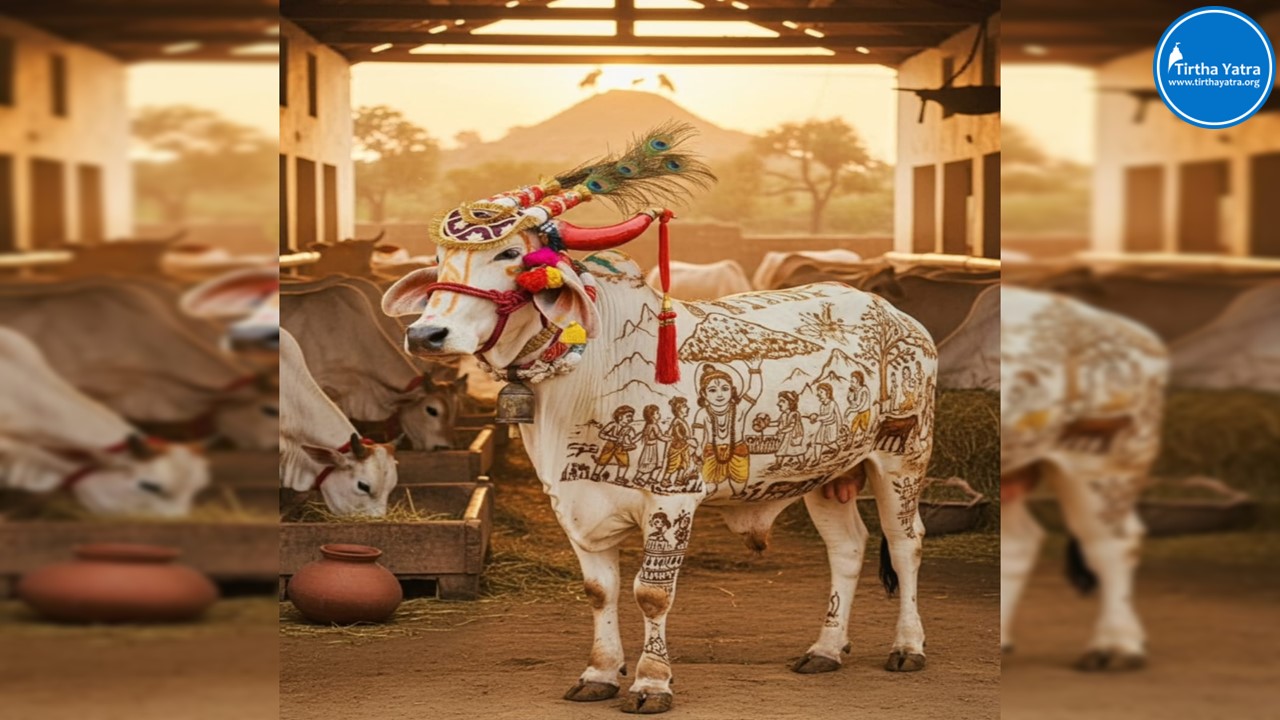
How Cows Are Decorated in Nathdwara
The cow decoration process is both sacred and artistic. Rituals include:
- Ceremonial Bathing with turmeric-infused water for purification
- Tilak Application using kumkum and sandalwood paste
- Floral Garlands made of marigolds, jasmine, and roses
- Painted Horns with natural colors in festive patterns
- Decorative Cloths and Ornaments, including embroidered fabrics, bells, and beads
- Peacock Feather Garlands symbolizing Lord Krishna’s divine connection
Gau Puja Rituals and Community Involvement
After decoration, cows are worshipped through aarti, parikrama (circumambulation), and offerings of jaggery, fruits, and sweets. Local artisans, temple volunteers, and families actively participate, turning the streets into a vibrant celebration filled with rangoli, incense, and devotional music.
Spiritual and Environmental Significance
Govardhana Puja in Nathdwara promotes sustainable agriculture, ethical animal care, and environmental awareness. Cows play a vital role in rural life—providing milk, dung for fuel and fertilizer, and bullocks for farming. The festival encourages compassion, preservation of indigenous breeds, and support for gaushalas (cow shelters).
Conclusion
Nathdwara’s cow decoration tradition during Deepavali and Govardhana Puja is a beautiful blend of faith, culture, and ecological wisdom. It reflects a timeless bond between humans, nature, and the divine—making it a celebration that’s both spiritually uplifting and environmentally meaningful.


Leave a Reply