
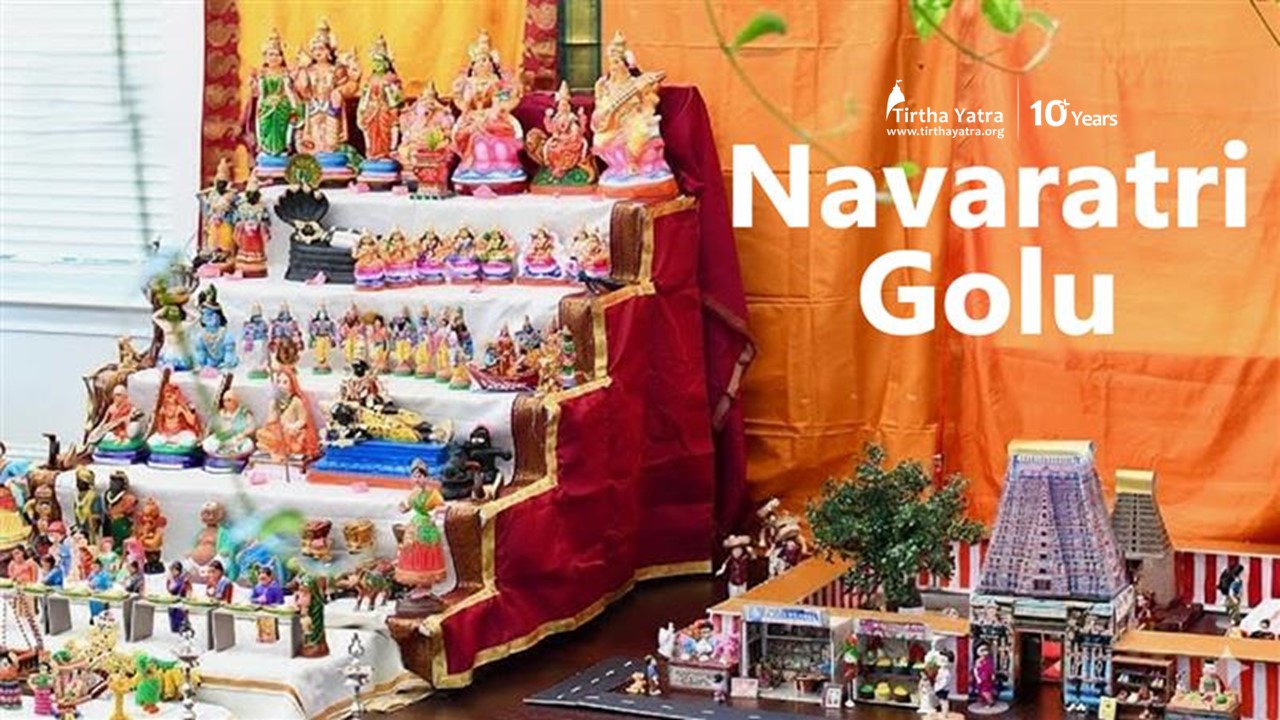
Golu, also known as Bommai Golu, is the name associated with the traditional Dasara festival. It is a widely cherished festival in South India, especially in the states of Karnataka, Tamil Nadu, and Andhra Pradesh.
Tradition involves the artistic arrangement of dolls on tiered steps, which symbolizes various aspects of life, mythology, and spirituality.
In Tamil Nadu, it is known as Bommai Golu; in Andhra Pradesh and Telangana, it is called Bommala Koluvu; and in Karnataka, it is referred to as Bombe Habba.
Usually, Golu’s are displayed thoughtfully in steps, by captivating some themes that bring stories and traditions to life. These themes often include dramatic retellings from the great Indian epics like the Ramayana and the Mahabharata.
Also, Golu depicts beautifully crafted wedding scenes that reflect cultural rituals, charming depictions of everyday village life, and intricate setups featuring miniature kitchen utensils that showcase domestic traditions and craftsmanship.
Origin of Golu
Traditions of Golu are carried out to celebrate the victory over evil, symbolizing the victory of Durga Devi, slaying the demon Mahishasura. These dolls are displayed as a part of reverence and storytelling.
The traditions of Golu were celebrated during Navaratri (Dasara) during the Vijayanagar times. The tradition of Golu was a royal celebration in the streets of Hampi during the reign of Vijayanagara. This was made into a cultural practice, which is still alive even today in regions like Karnataka, Tamil Nadu, Telangana, and Andhra Pradesh. This tradition was carried out by the Mysore Wodeyar families.
The kings and queens encouraged the craftsmen to create dolls made of clay, wood, and metal. These dolls represented various gods, goddesses, like Ganesha, Lakshmi, Saraswati, Durga, Meenakshi, Kamakshi, Lord Sri Krishna, Lord Shiva, and many more. It also displays animals like Kamadhenu or the cow, parrot, monkey, Naga devatas, elephants, lions, and many more.
This doll set includes Raja-Rani dancing doll, Mysore Raja Rani set, tender coconut shop, village ladies doing household chores, farming, Mysuru Dasara, vegetable and fruit cart, and Tanjore dolls.
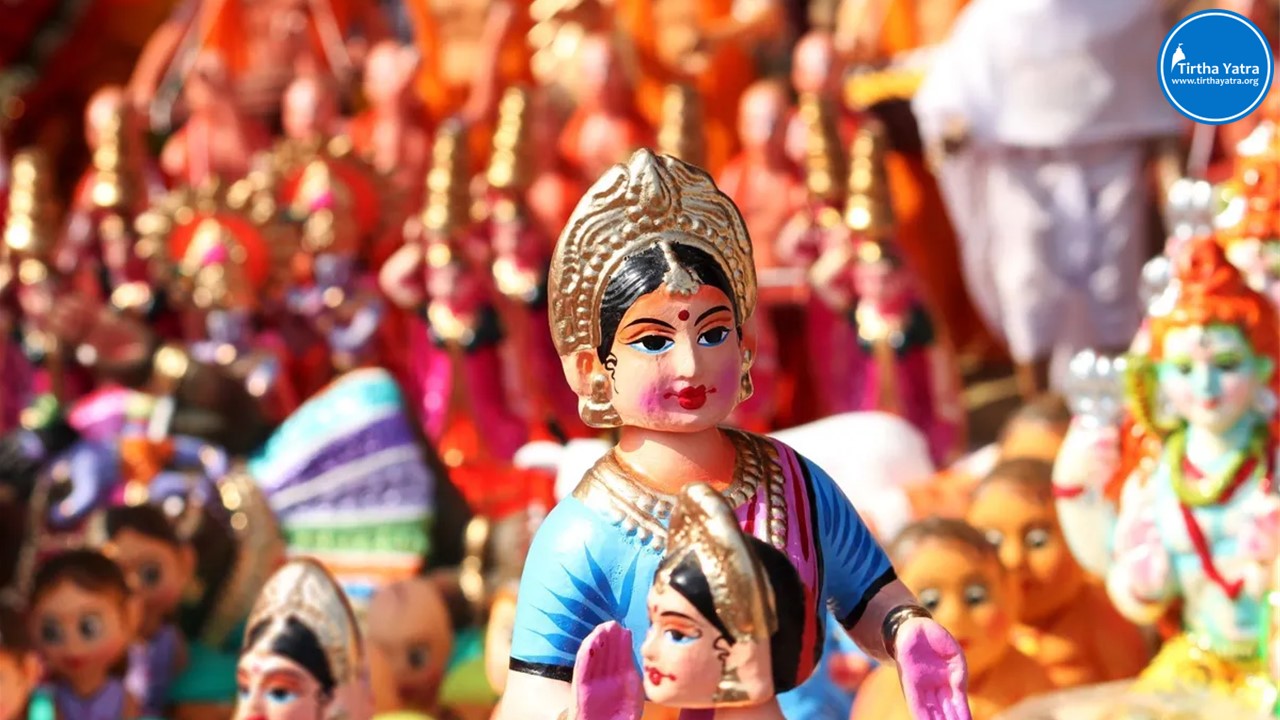
Also include scenes from various epics like Mahabharata, Ramayana, such as Seetha Kalyana, Gowri Kalyana, Thataka Vadha, Rama Sethu Bandana, birth of Rama and Krishna, Varanam Ayiram, Kumbakarna set, Sanjeevani Parvata, Ravana Vadha, Sri Rama Pattabhishekha, Lord Sri Rama breaking the bow and many more.
These dolls are richly decorated and are precisely placed in steps. They are treated with immense love, care, and respect. They occupy a proud place in each and every Hindu home.
Every doll is treated like a family member and is given special care. Every night before going to bed, the gods are put to sleep by singing lullabies. Just before the tenth day, these dolls are lovingly laid down from their standing position. On the eleventh day, they are safely stored in Gombe Totti and again used for next year’s Dasara.
How Golu is Displayed
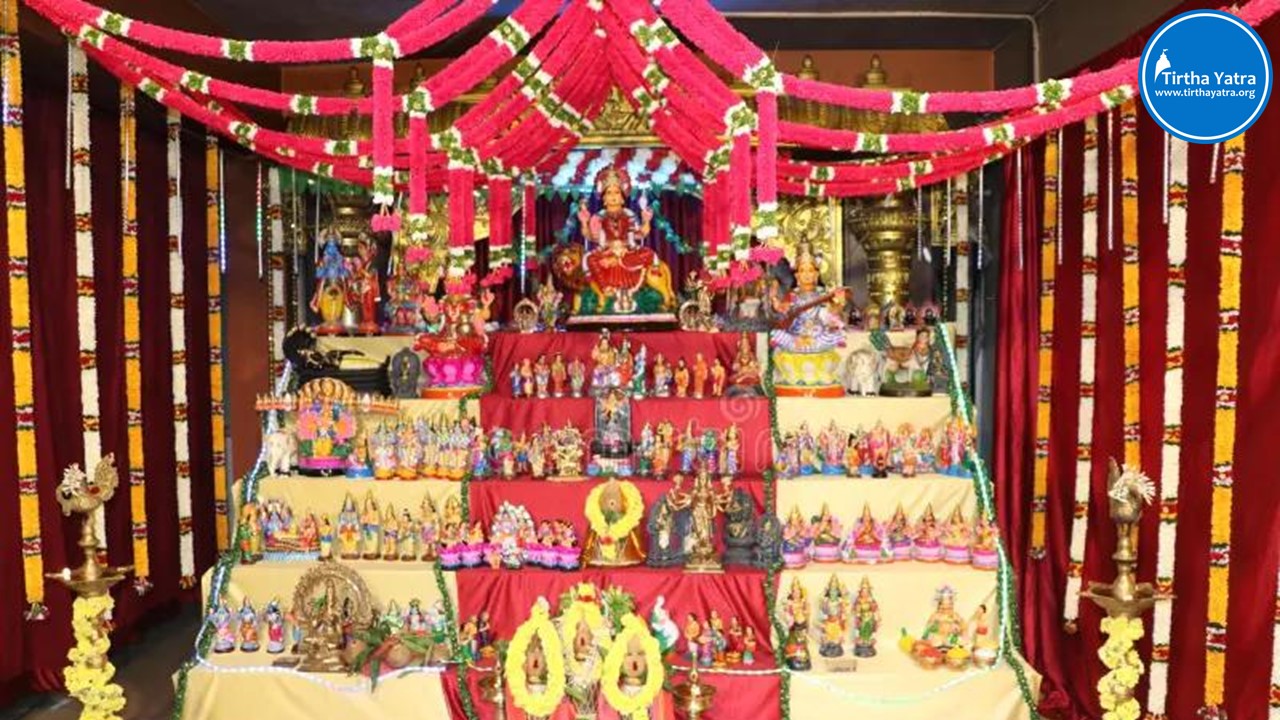
Dolls are arranged in steps: According to the traditions that have been followed for centuries, the dolls should be arranged in steps. Here, each step represents a different aspect of life. Typically, the dolls are displayed in steps and will be in odd numbers like 3, 5, 7, 9, or 11. Each step is beautifully covered with fine cloth and decorated with colorful lights, such as LED lights and beautiful decorations.
Various Puranic Themes are used: Golu are displayed by selecting various themes from epics like Ramayana, Mahabharata, and Puranas. They also include day-to-day lifestyles, village lifestyles, weddings, musical instruments, animals, and many other auspicious items.
Marapachi Dolls: These dolls are considered very auspicious and are passed from one generation to another. Also known as Marapachi Bommais, they are made of different kinds of woods, such as red wood. These dolls usually represent couples.
Cultural Practices
During Navaratri, families invite their friends, family, and neighbors to view the displays of Golu. They chant shlokas, exchange their gifts, and share festive foods. This helps with community bonding and cultural sharing.
In some regions, young girls are honored as embodiments of the goddess, emphasizing the celebration of feminine energy.
How Golu is Celebrated in Different Regions
Karnataka: It is widely called Bombe Habba, celebrated as a part of local customs and artistic expressions. The royal couple, called Pattada Gombe, the dolls are dressed as Kings and Queens. To continue the traditions of Golu, newly married daughters are gifted with Pattada Gombe by their parents.
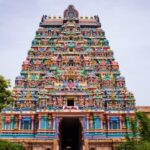
Tamil Nadu: It is known as Bommai Golu, or Golu Pandigai, with a strong emphasis on storytelling through elaborate displays. In the Madurai Meenakshi Amman temple, a Golu Mantapam is constructed, where the goddess Meenakshi is displayed in nine different forms during the festival. Here, Meenakshi Kalyanam, Lord Shiva’s cosmic dance, Kailasha Mountain, dasha avatara of Lord Vishnu forms a part of the Golu celebration.
Andhra Pradesh & Telangana: It is referred to as Bommala Koluvu. It is celebrated with great joy, enthusiasm, and divinity.
0


Leave a Reply