
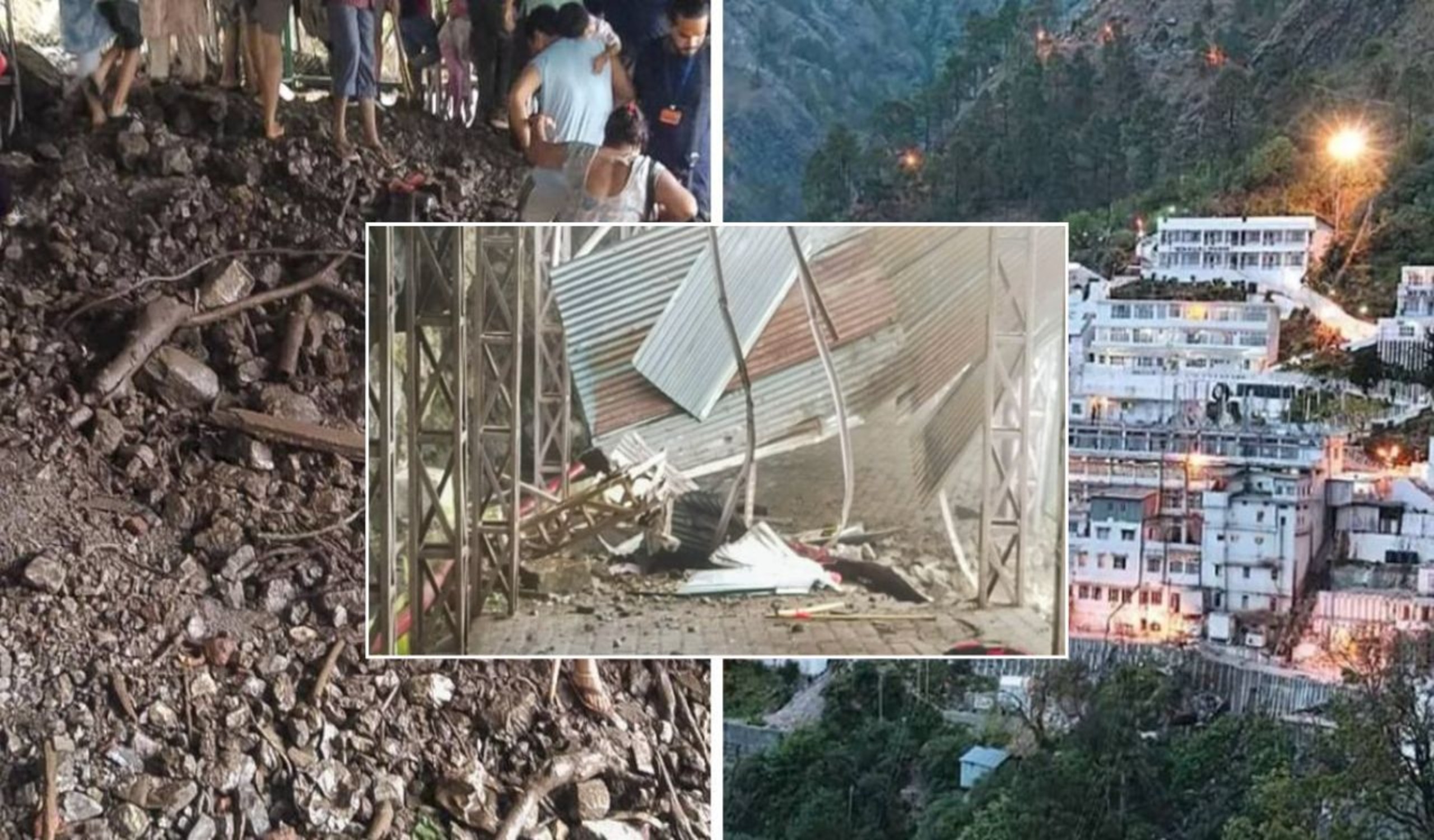
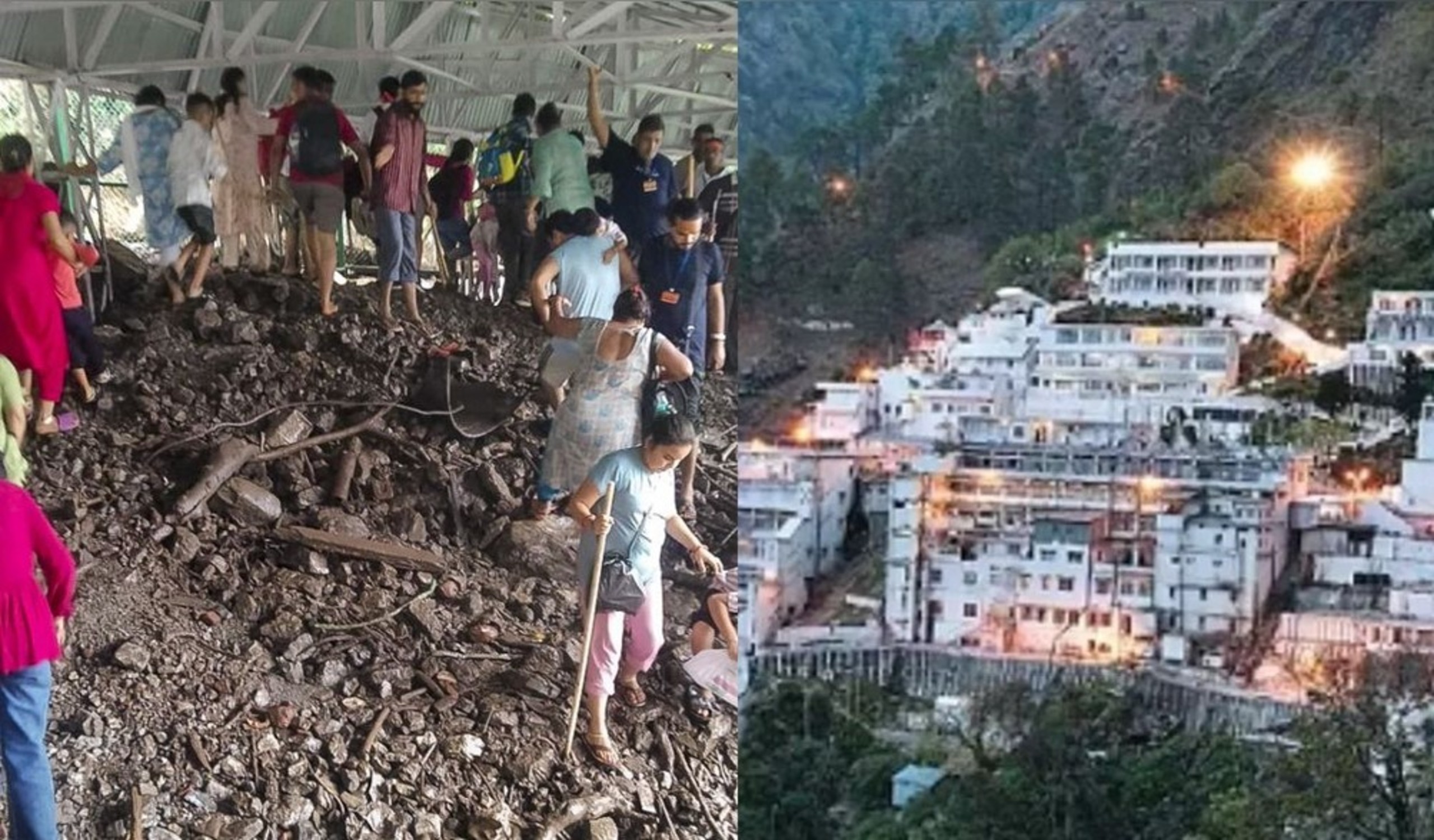
A catastrophic landslide struck the Vaishno Devi pilgrimage route in Jammu and Kashmir’s Reasi district on August 26, 2025, claiming the lives of at least 34 devotees and injuring over 20 others. Triggered by relentless monsoon rains, the disaster occurred near the Adhkuwari point, a key location along the 12-kilometer trek from Katra to the hilltop shrine.
The landslide hit around 3 PM, sending boulders and debris crashing down on pilgrims. Although the Shri Mata Vaishno Devi Shrine Board had suspended the pilgrimage earlier due to severe weather conditions, several devotees were still caught in the disaster. Rescue operations were swiftly launched by the Indian Army, NDRF, SDRF, and local authorities, with helicopters and ground teams working tirelessly to evacuate stranded individuals.
The Jammu and Kashmir administration responded by suspending the pilgrimage indefinitely, closing schools and colleges, and restricting night movement to ensure public safety. Rivers like the Chenab and Tawi are flowing near danger levels, raising fears of further flooding.
Manoj Sinha, the Lieutenant Governor, personally visited the SMVD Narayana Superspeciality Hospital to meet with those injured in the landslide and pledged ₹9 lakh in relief for each bereaved family. Prime Minister Narendra Modi and other leaders expressed deep sorrow over the tragedy, while Chief Minister Omar Abdullah questioned the preparedness of authorities, stating, “If we already knew about the weather, couldn’t we have done something to save those innocent lives?”.
The landslide is part of a broader crisis in Jammu and Kashmir, where continuous rains have caused flash floods, damaged infrastructure, and disrupted communication networks. Train services in the Jammu division were suspended, and several roads remain blocked due to landslips.
As rescue and relief efforts continue, authorities have urged pilgrims to postpone their visits until conditions improve. The incident serves as a stark reminder of nature’s unpredictability and the urgent need for robust disaster preparedness in vulnerable regions.







Leave a Reply