
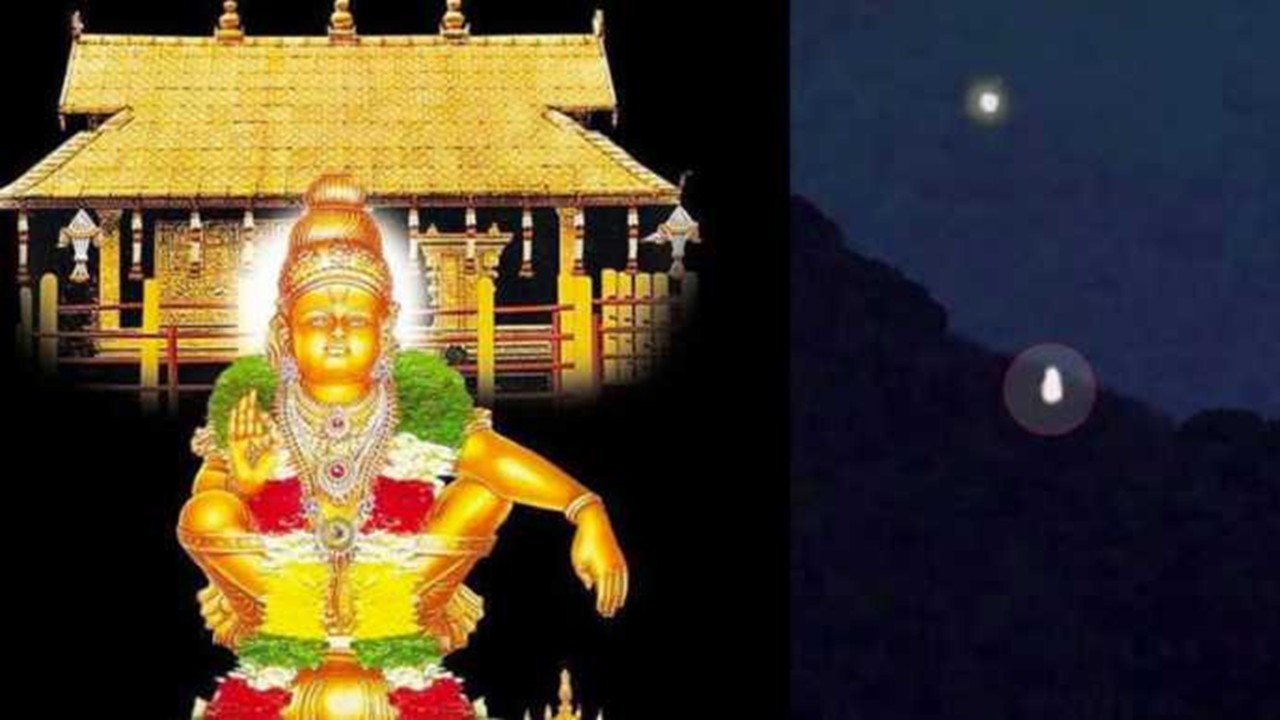
Though the two terms are often used interchangeably by devotees, they represent distinct spiritual and ritual elements of the festival — one celestial and rooted in spiritual symbolism, the other a traditional ritual performed on the ground.
Makara Jyoti: The Celestial Star
The sighting of this celestial light typically occurs around sunset on January 14 or 15 each year, and is regarded by devotees as a divine manifestation of Lord Ayyappa’s presence. Thousands gather on the slopes and plains around Sabarimala to witness this star rise on the horizon, believing that viewing the Makara Jyoti can purify the mind and fulfill heartfelt prayers. The star’s bright radiance against the evening sky creates a moment filled with reverence and deep spiritual emotion among the gathered pilgrims.
Importantly, Makara Jyoti is a natural astronomical event — the appearance of the Sirius star in the sky — and not created or influenced by human activity. Temple authorities, priests, and scholarly commentators emphasize this distinction, noting that the star is a cosmic beacon rather than a ritualistic light.
Makara Vilakku: The Ritualistic Flame
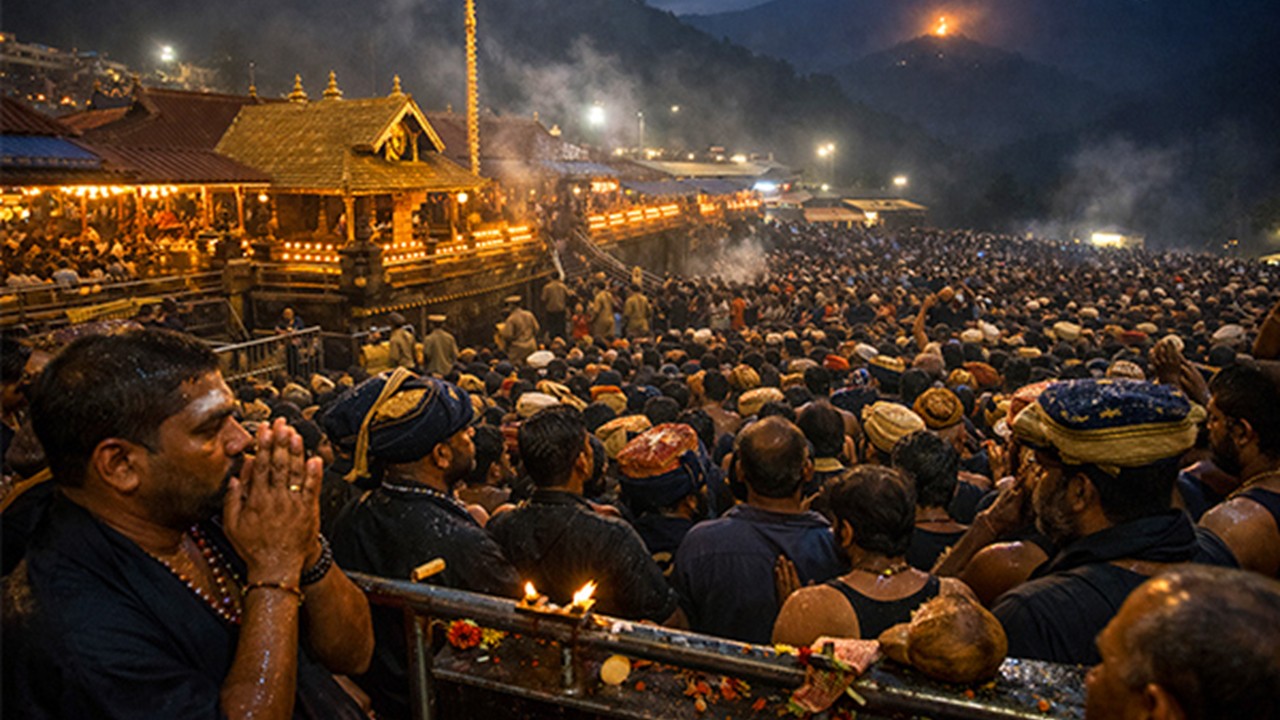
This flame is not a spontaneous natural occurrence; instead, it is lit by people — traditionally by tribal communities from the region and now by teams organized under the Travancore Devaswom Board, in cooperation with government agencies such as the Forest Department, Kerala Police, and Kerala State Electricity Board.
While Makara Vilakku was once deeply rooted in tribal ritual practices, contemporary records and authorities acknowledge that it is a man-lit ritual flame rather than a supernatural event. Regardless of its origin, for many devotees it remains a sacred symbol — seen as a divine acknowledgment of their intense spiritual journey and devotion after completing the rigorous 41-day vratham (penance) undertaken before arriving at Sabarimala.
The visual of the bright flame appearing on the distant hilltop, visible even from the temple premises and surrounding regions, evokes tremendous emotion. It marks the culmination of the pilgrimage season, symbolizing spiritual fulfillment after months of disciplined worship, celibacy, and devotion.

Why Both Are Important
The festival not only celebrates a key moment in the Hindu solar calendar but also underscores the unity of nature’s cosmic rhythms and ancient devotional practices. Pilgrims returning from Sabarimala often speak of how witnessing these phenomena deepens their faith and reinforces their spiritual purpose, making the arduous journey truly transformative.
There’s a misconception pushed by some critics that Makara Jyoti is merely superficial and man-made, with no real significance. However, the truth is that both Makara Jyoti and its associated traditions hold deep cultural and spiritual importance for millions of devotees.
In summary, while Makara Jyoti and Makara Vilakku are often spoken of together, they are distinct in their nature, origin, and symbolism. The Makara Jyoti is a celestial occurrence — the rising of the Sirius star. Makara Vilakku is a ritual flame kindled on the Ponnambalamedu hills, a tradition upheld by communities and temple authorities that marks the conclusion of the pilgrimage season and the fulfillment of devotional austerities.
Together, they represent the essence of devotion, faith, and cosmic celebration that make the Sabarimala Makara Sankranti pilgrimage one of India’s most revered spiritual gatherings.



Comment On Understanding the Difference Between Makara Jyoti and Makara Vilakku
A.VASANTAA
Beautifully explained. Swamy saranam
Iyappa