

The sacred hill of Tirumala is also known by different names, such as Sri Kshetra, Sapthagiri, Kaliyuga Vaikuntha, or Bhuloka Vaikuntha. It is the heavenly abode of Lord Sri Venkateshwara Swamy, who dwells here along with His divine consorts Padmavati and Bhudevi.
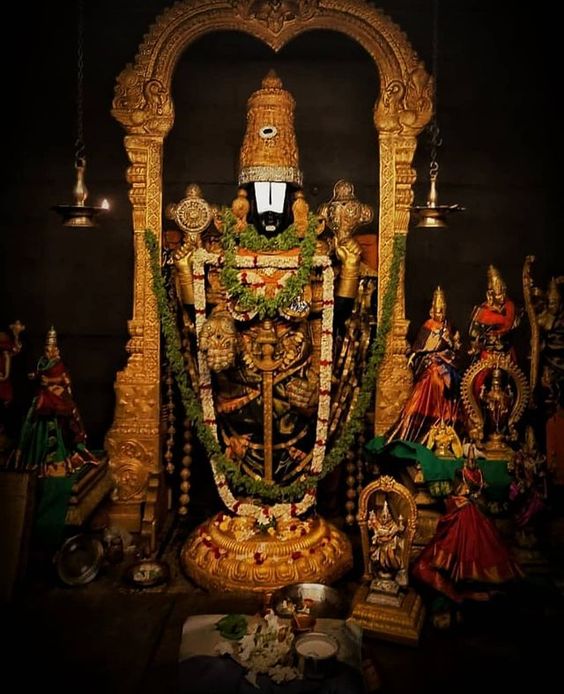
Sri Venkateshwara Swamy is called Kaliyuga Daivam, He who protects His devotees from Kali Purusha. He is the presiding deity of the sacred Tirumala Hill.
- Seshadri
- Neeladri/Vrishadri
- Garudadri
- Anjanadri
- Vrushabadri
- Narayanadri
- Venkatadri
Atop the seventh peak, Venkatadri, the world-famous Lord Venkateswara Temple is located.
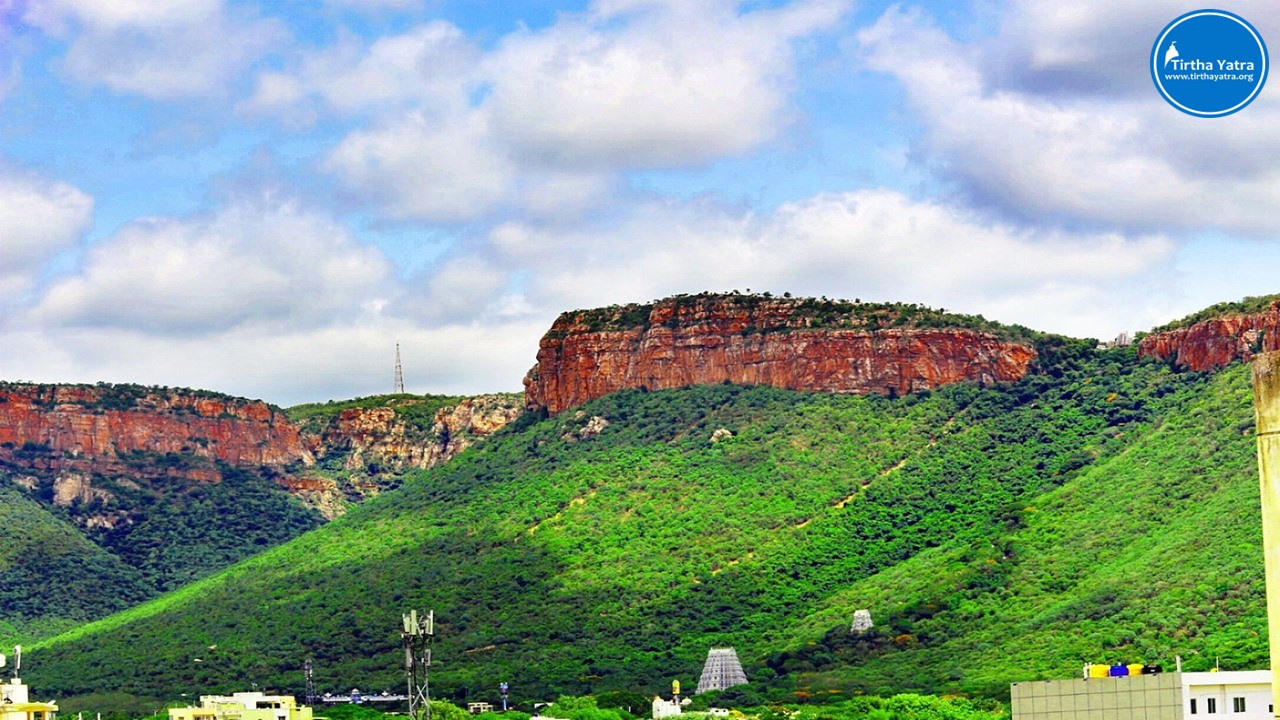 The sacred word ‘Tirumala’ is derived from Dravidian roots, where ‘Tiru’ translates to ‘divine’ or ‘sacred’, while ‘mala’ translates to ‘hill’ or ‘mountain’. Together, it conveys the meaning of ‘sacred hill’, which is an abode of Sri Venkateshwara.When a devotee utters the very word ‘Tirumala’, hears it or even remembers it, Lord Srinivasa, Venkateshwara, Balaji, Srivaru, Perumal, Govinda, Venkata Chalapati, Yedukondalavada, and Thiruvengadam Udaiyaan comes into the mind, and one can enjoy the transcendental bliss.
According to the Bhavishyottara Purana, the Tirumala hills are nestled amidst the scenic beauty and are known by different names in each of the four yugas, which reflects the progressive spiritual insight.
Kali-yuga: Venkataadri
Vrishabhaadri
In Krita-yuga, there lived a strong and powerful demon, Vrishabha, who was an ardent devotee of Lord Narasimha. Due to his arrogance, he used to disrupt the penance of the sages.
Every day, he used to take a bath in Tumburu Tirtham and perform tapas.
For five thousand years, he performed severe tapas for Lord Narasimha by cutting off his head and offering it to the Lord. And then, again, he would join it back to his torso region, with his power and the mercy of Lord Narasimha.
Pleased by his unwavering dedication and pure devotion, Lord Narasimha appeared before him in the form of Lord Narayana and invited Vrishabha to request any boon he wished.
The demon Vrishabha only wished to have a duel with Lord Narayana. To fulfil the wish of his devotee, the Lord Narayana fought with the demon Vrishabha for twenty-seven days. Though the Lord Narayana could finish him off in just a second, the all-merciful god, to fulfil the wishes of his devotees, started a dual fight with Vrishabha.
After a long, tremendous fight, the strength and valour of Vrishabha were weakened. Finally, when Lord Narayana was about to slay the demon Vrishabha, he accepted his defeat and offered his prayers.
Vrishabha, in his prayers, requested Lord Narayana to name the hill where the fight took place between the lord and the demon after him. Thus, this hill came to be known as Vrishabaadri or Vrishabhachala.
Anjanaachalam
In Treta-yugam, there lived a Vanara king, Kesari, and his wife, Anjana, who was very pious and soft by nature. Though being an ardent devotee of Lord Vishnu, they did not have a progeny. They longed to have a son.
On the advice given by the sage Matanga, they visited Vrishabhadri. Anjana Devi took a holy dip in the sacred pond Akasha Ganga. Also, she had a bath in Swamy Pushkarini and visited the Varaha Swamy Temple and offered her prayers.
After performing severe penance for twelve years and by the grace of Vayu deva, Anjana Devi was blessed with a son. They named him Hanuman.
Since this hill is the birthplace of Anjaneya Swamy, and also the place where Anjana Devi did penance. This hill came to be known as Anjanadri.
Sheshadri
There were two gatekeepers in Vaikuntha, who were Jaya and Vijaya. They were so arrogant, this led to be cursed by the sages: Sanaka and Sananda. Hence, they were reborn in Bhuloka as demons.
During their absence, Lord Vishnu appointed Adi Shesha as dwara palaka at Vaikuntha.
Once, Vayu Deva wished to have the darshan of Lord Vishnu; therefore, he visited Vaikuntha. But was stopped by Adi Shesha. Though Vayu Deva tried his level best to convince Adi Shesha to allow him to enter Vaikuntha, he never paid heed to it. The verbal duel between the two reached its peak, and finally, Lord Vishnu intervened in it.
Hence, to break the ego of Adi Shesha, Lord Vishnu gave them a test to prove their mental and physical strength.
Thus, the Lord Vishnu, showing a mountain far away, said, “That is Ananda, who is the son of Meru Parvata. You go there and wind yourself around Ananda Parvata so tightly with all your strength. Also, protect it by spewing your venomous breath. If Vayu Deva succeeds in moving the mountain, he wins the test. And if he fails to move, you’ll be considered the most powerful.”
As soon as Lord Vishnu announced the test, Adi Shesha reached Ananda Parvata and wound himself around it so tightly to protect it from Vayu Deva.
Vayu Deva, being very humbled, offered his prayers to Lord Vishnu, touched the mountain with his little toe, and it flew a thousand miles away, carrying Adi Shesha along with it and moving in a southward direction. And at last, it came to rest along the banks of the Suvarnamukhi river. These mountain ranges extended from Srisailam to Venkatagiri in Tirumala. This was popularly known as Seshadri or Seshachalam.
Venakadri/Venkatachalam
In the age of Kali-yuga, this hill is called Venkatachalam, because it has the power to purify all the sins performed in this lifetime as well as previous lifetimes. The word ‘Vem’ can be translated to ‘various kinds of sinful deeds’, while ‘kata’ can be translated to ‘power that destroys or burns them away’.
Various Festivals Celebrated at Tirumala
Tirumala, the land of Lord Sri Venkateshwara, is a religious hub where festivals are celebrated in great splendour. Sri Venkateshwara Swamy enjoys celebrating festivals. Brahmotsava is the most prominent festival celebrated here for nine days. Other renowned festivals include Ugadi, Deepavali, and Pavithrotsavam.
Best Time to Visit Tirumala
November to February is the best time to visit Tirumala.

How to Reach Tirumala
Embark on your spiritual journey to the sacred hill of Tirumala and have the divine darshan of Lord Sri Venkateshwara.
If you still wish to travel on your own, here are a few options.
By Air: The nearest domestic airport to Tirumala is Tirupati Airport, located in Renigunta, which is 40 Kms away. Another major nearest international airport is Chennai International Airport, which is at a distance of 162 Kms. From the airport, you can take a taxi or bus to Tirumala.
By Railway: Tirupati Railway Station is the nearest railway station. From here, you can either take a taxi or board a bus to Tirumala hill.
By Road: Several bus services operate from Tirupati to Tirumala, including APSRTC. You can also find buses from other cities to Tirupati, which is a major transportation hub. The journey from Tirupati to Tirumala by bus takes approximately 1 hour. You can also find direct buses from Tirupati Airport to Tirumala.

Leave a Reply