
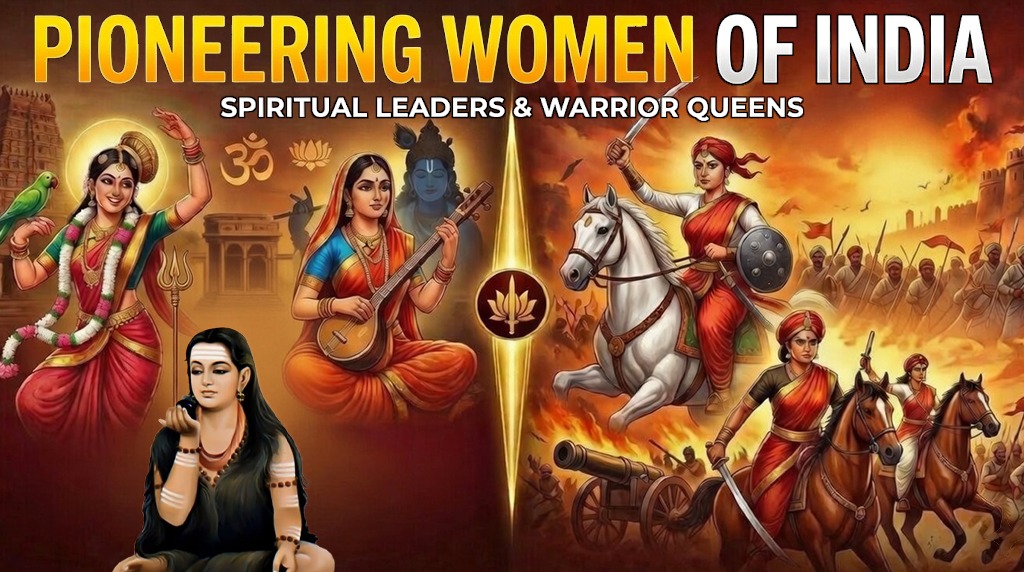
The Bhakti movement in India (6th–17th century) provided a powerful platform for women to express their devotion and spiritual beliefs. Women like Andal, Mirabai, Akka Mahadevi, and others challenged orthodox traditions while condemning caste discrimination and gender inequality. Through poetry, songs, and personal devotion, these women carved a unique spiritual identity in Indian society.
Prominent Women Saints of the Bhakti Movement
Akka Mahadevi
A 12th-century poet-saint from Karnataka, Akka Mahadevi considered Lord Shiva her divine husband. She composed hundreds of vachanas having Chenna Mallikarjuna as ankita nama (signature name). Through her vachanas she questions evil caste hierarchy, and ritualistic rigidity. Her writings are foundational in Kannada literature and reflect profound spiritual insight.
Andal
Andal, the only female Aḻzwar and an incarnation of Bhumi Devi, dedicated her life to Lord Sri Ranganatha. Born as Goda Devi and raised by her foster father Medhavi, she adorned temple garlands herself, symbolizing her love for the Lord. When her father objected and tried to replace the garlands, Lord Ranganatha rejected them, showing that He preferred only the one worn by Goda for its fragrance of pure devotion.
Her devotional works, Tiruppavai and Nachiyar Tirumoli, remain timeless inspirations for spiritual seekers.
Karaikal Ammaiyar
Karaikal Ammaiyar, born as Punithavathi is a notable saint in Karaikal, Tamil Nadu. She renounced worldly beauty to devote herself entirely to Lord Shiva. Her skeletal, ghost-like form symbolizes complete detachment and spiritual dedication. Her life is celebrated for extreme devotion and renunciation.
Mirabai
A 16th-century poet-saint from Rajasthan, Mirabai dedicated her life to Giridhar Gopalal through devotional poetry and bhajans. She became a symbol of spiritual rebellion, challenging societal norms while inspiring devotion and courage among women.
Lalleshwari
Also known as Lal Ded, she was a 14th-century saint in Kashmir, whose vakhs combined spiritual wisdom with social critique. Her teachings influenced Kashmiri Shaivism and inspired generations of seekers.
Bahinabai
A 17th-century saint-poetess of the Maharashtra’s Bhakti movement, Bahinabai composed abhangas emphasizing devotion to Vithoba and spiritual discipline. She is remembered for balancing household responsibilities with deep spiritual practice.
Sakkubai
Sakkubai or Sakubai was a 15th-century saint from Maharashtra, devoted wholeheartedly to Lord Panduranga (Krishna) in Pandharpur. Despite facing harsh treatment from her mother-in-law, her devotion remained unwavering. Legends say that Lord Krishna took her form to complete her household tasks, giving her the freedom to visit Pandharpur and express her faith. Her life and devotion have been depicted in the film Sati Sakkubai.
Sati Savitri
Savitri is celebrated for her courage and devotion, famously saving her husband Satyavan from death. She symbolizes loyalty, determination, and the power of virtuous love.
Renuka
Mother of the sage Parashurama, Renuka is known for her devotion and purity. Her story highlights maternal strength, obedience, and spiritual resilience.
Kubja
A woman from the Bhagavata Purana, Kubja was a hunchbacked woman healed by divine and gentle touch of Lord Sri Krishna. Her tale represents devotion, transformation, and divine grace.
Kunti
Kunti was known for her wisdom, courage, and moral strength. She navigated complex family and political challenges while raising the Pandavas. She played a key role in the Mahabharata by raising the Pandavas with strong moral values.
Draupadi
The fiery queen of the Mahabharata, Draupadi is revered for her intelligence, courage, and unwavering dignity. She played a crucial role in shaping events of the epic and challenging injustice.
Sabari
An elderly woman, who waited patiently in the forest her entire life only for the darshan of Lord Sri Rama. Her devotion and love for Lord Rama was so intense that she gave tasted berries ensuring they were sweet. She symbolizes faith, patience, and selfless service.
Kannagi
Kannagi is the chaste, and virtuous wife of Kovalan. She questioned the Pandyan King for accusing her husband of theft and wrongful execution. Due to her curse, entire city of Madurai was burning for one day. Kannagi is worshiped at the Attukal Bhagavathy in Kerala and the Mangala Devi Kannagi Temple in Sri Lanka. She represents justice and moral courage in Tamil literature.
Jijabai (Mother of Shivaji)
Jijabai, mother of Shivaji, was instrumental in shaping Shivaji’s values of courage, justice, and governance. She is celebrated for her vision, resilience, and role in the rise of the Maratha empire.
Before Independence: India’s Warrior Queens
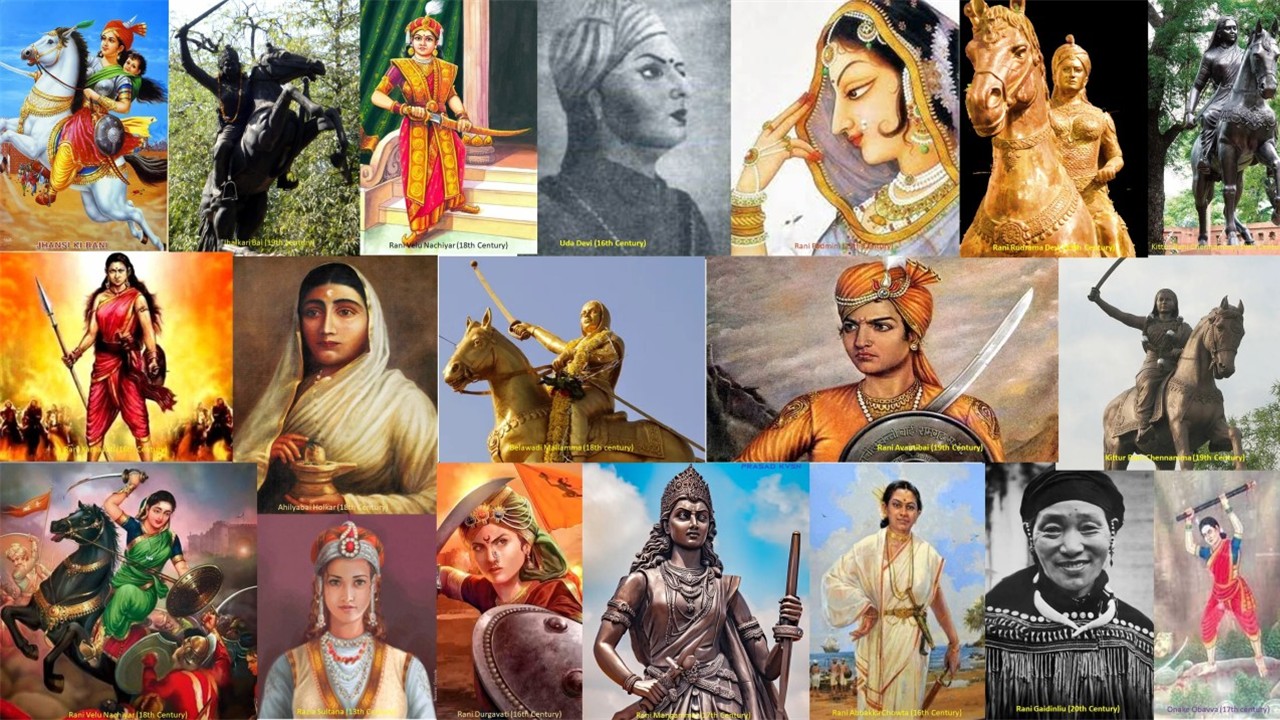
India’s history is filled with fearless warrior queens who faced empires, commanded armies, and chose resistance over surrender—from Gondwana to Ullal, Sivaganga to Kittur, and Jhansi to the pages of history. Long before modern feminism, India was home to fearless warrior queens whose names deserve to be remembered.
Rani Lakshmibai (1828–1858)
The Queen of Jhansi, Rani Lakshmibai, was one of the most iconic women in India’s freedom struggle. She led her army against the British during the 1857 Revolt, displaying unmatched courage and strategic skill. Her valor continues to inspire generations of Indians.
Kittur Chennamma (Kittur, 1824)
Kittur Chennamma bravely fought against the British over the Doctrine of Lapse, refusing to surrender her kingdom and rejecting colonial domination. She led armed resistance decades before the 1857 rebellion. Kittur stood strong because she herself stood unwaveringly for her people and sovereignty.
Abbakka Chowta (Ullal, 16th Century)
Queen Abbakka Chowta was a 16th-century ruler of Ullal, Karnataka. Being the ruler from the coastal region of Kundapur, she fiercely defended her kingdom not once but from repeated Portuguese invasions, employing strategic alliances and guerrilla tactics. Remembered as one of India’s earliest women freedom fighters, she remains a symbol of courage and leadership.
Velu Nachiyar (Sivaganga, 18th Century)
Velu Nachiyar was the first Indian queen to wage war against the British. She skillfully built alliances, formed an all-women regiment, and launched a strategic counterattack that secured victory decades before 1857. Her leadership and courage set a remarkable example of female empowerment in warfare.
Rani Durgavati (Gondwana, 1564)
Rani Durgavati faced the mighty Mughal army of Akbar despite being outnumbered and outarmed. Choosing death over dishonor, she refused to surrender her kingdom. As a warrior queen, she ruled Gondwana with valor and remains a symbol of fierce resistance and honor.
Their journeys demonstrate that determination, and resilience can drive societal change.
From saints and poets to warrior queens, Indian women have shaped history through devotion, courage, and leadership. Their stories inspire generations and continue to redefine women’s roles in society.





Leave a Reply