

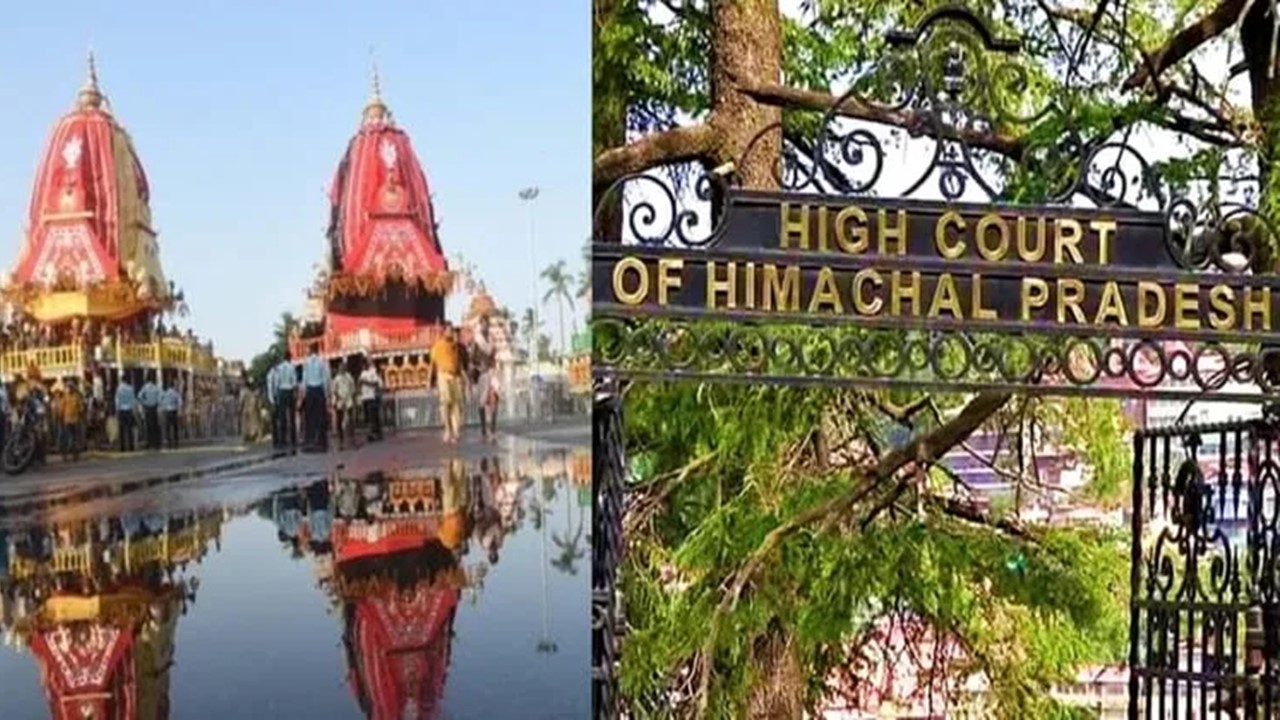
In a landmark judgment, the Himachal Pradesh High Court has ruled that donations made to Hindu temples are sacred and cannot be diverted for government welfare schemes or unrelated public projects. The court emphasized that every rupee contributed by devotees must be used exclusively for religious, dharmic, or charitable purposes linked to Hindu faith, preserving the sanctity of temple offerings.
Key Highlights of the Judgment
- Temple funds belong to the deity, not the government, and trustees act only as custodians.
- Any misuse or diversion of these funds will be treated as criminal breach of trust, with personal liability for recovery from those responsible.
- Funds cannot be used for roads, bridges, government schemes, VIP gifts, or commercial ventures unrelated to temple welfare.
- Mandatory public display of audited accounts on temple notice boards or websites to ensure transparency.
The ruling came in response to a petition seeking strict compliance with the Himachal Pradesh Hindu Public Religious Institutions and Charitable Endowments Act, 1984. The court directed that temple funds should support deity care, temple maintenance, promotion of Sanatan Dharma, cultural activities, and dharmic charity.
Why This Matters
The judgment reinforces the principle that devotees’ offerings are sacred and must not be treated as state revenue. It safeguards religious freedom and institutional integrity, ensuring that temples remain centers of faith, culture, and social welfare without political or administrative misuse.
Transparency and Accountability
To build trust among devotees, the court mandated:
- Annual audits of temple accounts.
- Public disclosure of income and expenditure.
- Strict adherence to statutory provisions for budget preparation and fund utilization.
This historic decision is expected to set a precedent for other states, ensuring that temple donations serve their intended purpose and uphold the spiritual and cultural ethos of Hindu Dharma.










Leave a Reply