
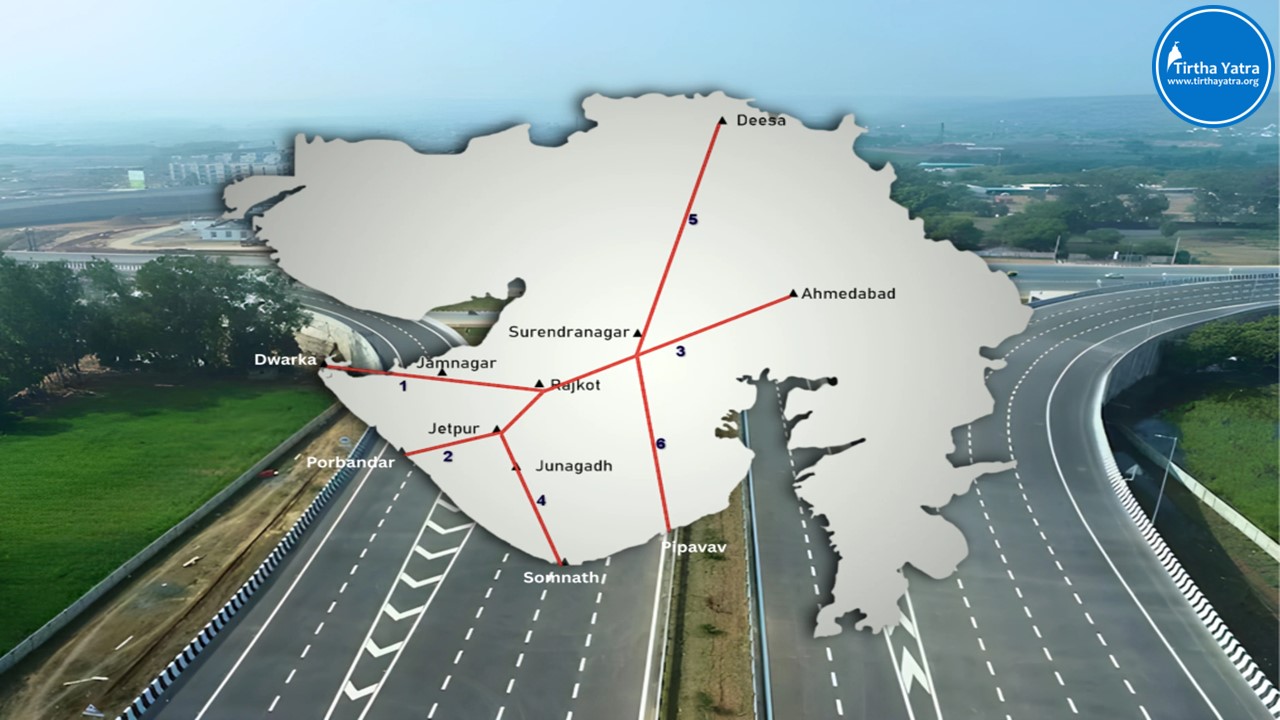
The projects are being implemented under the Gujarat State Road Development Corporation (GSRDC), which in May 2025 invited proposals from consultants to conduct feasibility studies and prepare Detailed Project Reports (DPRs) for all six expressways. The studies will assess the technical and financial viability of the projects and design four- to six-lane high-speed corridors, with completion expected within a 12-month period.
The proposed expressways are:
- Deesa–Surendranagar (220 km)
- Surendranagar–Pipavav (211 km)
- Rajkot–Dwarka (209 km)
- Rajkot–Porbandar (190 km)
- Ahmedabad–Rajkot (170 km)
- Jetpur–Somnath (110 km)
The Namo Shakti Expressway, connecting Deesa to Pipavav over 430 km, will cost ₹39,120 crore and link northern Gujarat with the Saurashtra region, boosting trade, agriculture, and port access. The Somnath–Dwarka Expressway, covering 680 km with an estimated cost of ₹57,120 crore, will enhance connectivity between sacred pilgrimage centres such as Somnath and Dwarka while supporting industrial growth in Ahmedabad, Sanand, and Rajkot.
This strategic network will also integrate key ports like Pipavav and Porbandar, improving Gujarat’s connection to national and global markets. Once completed, Gujarat’s total four- to six-lane highway length will exceed 8,000 kilometres.
Officials estimate that 45% of the state’s population across 13 districts will benefit directly. The expressways will feature 42 interchanges, wildlife crossings, and amenities every 50 kilometres—including rest areas, food courts, and fuel stations.
By reducing travel time between district headquarters to under an hour, the new expressway grid is expected to transform Gujarat’s logistics landscape, foster industrial expansion, and strengthen its reputation as India’s gateway for trade, tourism, and transport.







Leave a Reply