
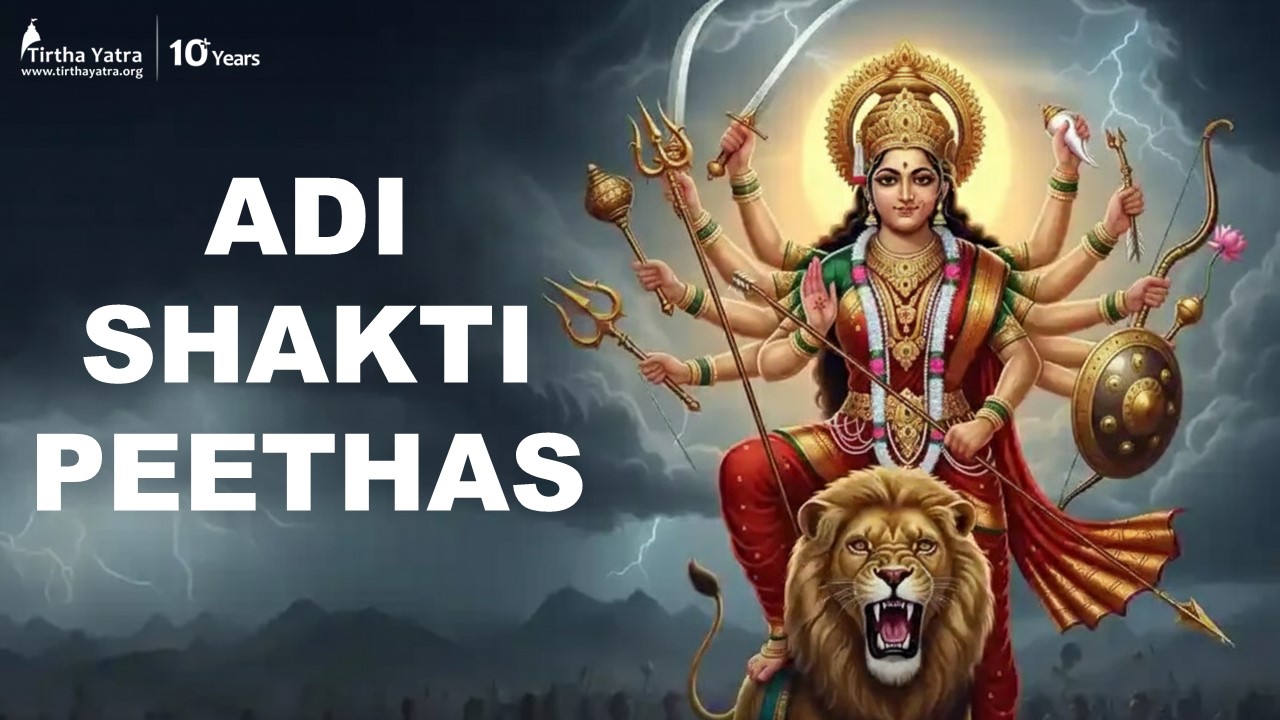
Nava Durgas represent the nine phases in a women’s life, her transformation from a daughter to a state of empowered women. When a girl child is born, she first
becomes a daughter to a family, this is the first relationship that women establish.
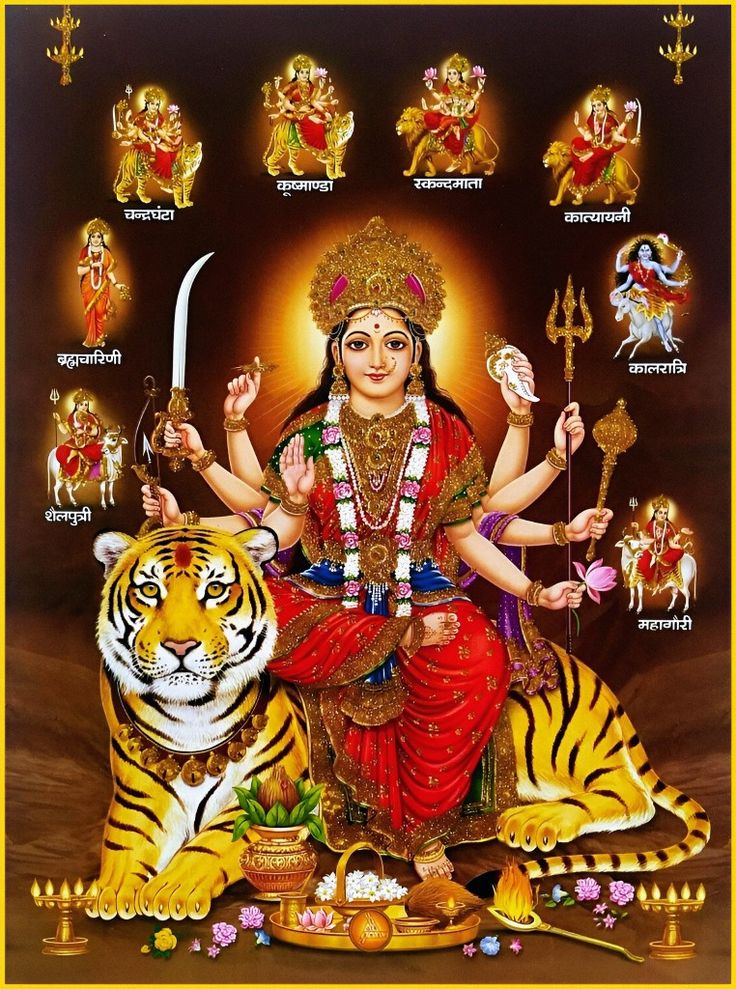
Similarly, Devi Shailaputri is represented as a daughter of mountains. After being a child, devi enters the phase of Brahmacharini, this represents the life of a student. Here the focus is only on learning and acquiring knowledge. Hence, Devi Brahmacharini does not carry any weapons.
In the next phase, goddess is ready to get married and hence is called Chandraganta. In this stage, she wears the crescent moon of her husband. After marrying, she is ready to become mother and called Kushmanda. The word Kushmanda represents cosmic egg. Finally, when she becomes nurturing mother of Karthikeya, she is called Skandamata.
From here, the other phase of a women begins, facing both internal and external conflicts in a world. When the devi slays the demon Mahishasura, she is known as Katyayini. Slaying of demon represents both internal and external battles women faces in the society and overcoming it. When she breaks all the limitations and embraces her full potential, she becomes Kalaratri. When a woman gracefully goes through all phases of life and empowers herself, she becomes Maha Gauri. When she is able to uplift others and society and make the life of others beautiful, she is called Siddhidhatri, the compassionate goddess who bestows boons and power.
As the entire country is immersed in the festive spirit of Sharadiya Navaratri, celebrating Maa Durga and her Nine avatars – Navadurgas. We explore four centers of Devi worship. Adi Shankaracharya highly reversed these four Adi Shakti Peethas.
Numerous Puranas, including the Kalika Purana, mention the sacred Adi Shakti Peethas—divine sites where parts of Goddess Sati’s body are believed to have fallen. Below is the Stotra which mentions four shakti peethas.
Maa Bimala Devi, Puri: This is one of the four Adi Shakti Peetha, located inside the Sri Jagannatha Temple complex in Puri, Odisha. In this temple, Bimala Devi is worshiped in a peaceful form. This is one of the oldest tantrik Shakti Peethas, where there is a high feminine energy of the goddess Sati. Performing any meditation, chanting, or rituals here yields immediate results. It is considered the first among all the Shakti peethas described by Adi Sahnkaracharya. It is the place where the feet of Sati Devi fell when Lord Vishnu severed the body of Sati Devi. She is said to be the guardian of the Jagannatha Temple. The Prasadam that is offered to Lord Jagannatha becomes Mahaprasadam only after being offered to goddess Vimala Devi.
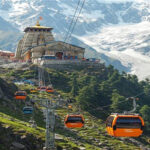
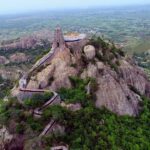
Maa Tara Tarini, Odisha: This temple is dedicated to the worship of the twin goddesses Maa Tara and Tarini and is carved out of stone. It is located in the cultural town of Ganjam district in Odisha state. It is the place where the breast of Sati Devi fell. Devotees need to climb 999 steps to reach the temple top.
Kalika Ghat Temple, Kolkata: This is a highly revered temple in Kolkata, West Bengal. It is the place where the right foot of Sati Devi fell, after Lord Vishnu severed the corpse of Sati Devi using Sudarshana Chakra. This 19th century temple is built on the banks of Adi Ganga.
Maa Kamakya, Assam: It is the most sacred, powerful, and tantrik temple. It is the oldest and most sacred of the 51 shakti peethas, located in Guwahati, Assam. According to the Sthala Purana, it is the place where Sati Devi’s yoni fell, while Lord Shiva was carrying the dead body of Sati Devi.

Leave a Reply