
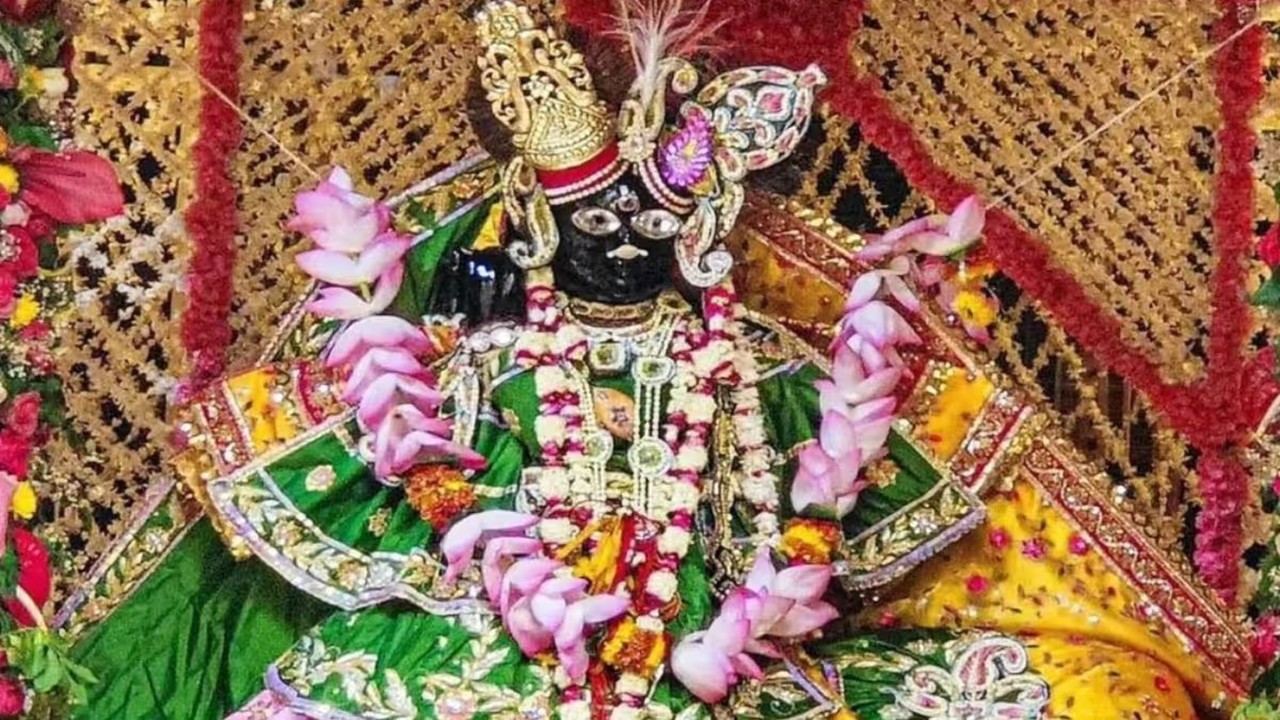
Significance of Bihar Panchami
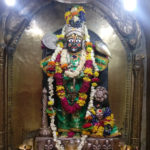
Bihar Panchami falls on the fifth day of the bright half (Shukla Paksha) in the Hindu month of Margashirsha, commemorating the divine manifestation of Shri Banke Bihari Ji Maharaj, a unique incarnation combining Radha and Krishna. According to legend, Saint Swami Haridas, through deep bhakti and devotional music, invoked both Radha and Krishna, who merged and appeared as one form on this very day.
Why the Curtain Falls at Banke Bihari Ji’s Temple
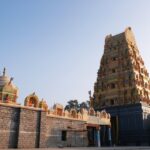
One of the most mystical traditions at the Banke Bihari Temple is the ritual of drawing a curtain (purdah) every few minutes during darshan. Devotees believe that Banke Bihari’s gaze is so powerful that if one stares too long, he might “follow them home.” This practice symbolizes humility and the fleeting, precious nature of divine vision.
Unique Traditions and Mystical Practices
- Nightly Raas Leela: It is widely believed that after temple hours, Banke Bihari Ji performs Raas Leela in Nidhivan, accompanied by the sound of the flute and devotional dance.
- Miraculous Manifestation: The Deity of Banke Bihari is not carved but is said to have manifested in response to Swami Haridas’s intense devotion.
- Child-Like Worship: The temple does not use bells, and there is no early morning aarti, reflecting the belief that Bihari Ji is akin to a child who should not be awoken loudly.
- At Nidhivan, a sacred abhishek is done on Banke Bihari’s symbolic footprints with milk, curd, honey, ghee, and water.
- The place is adorned with flowers, flags, and lights, creating a divine atmosphere.
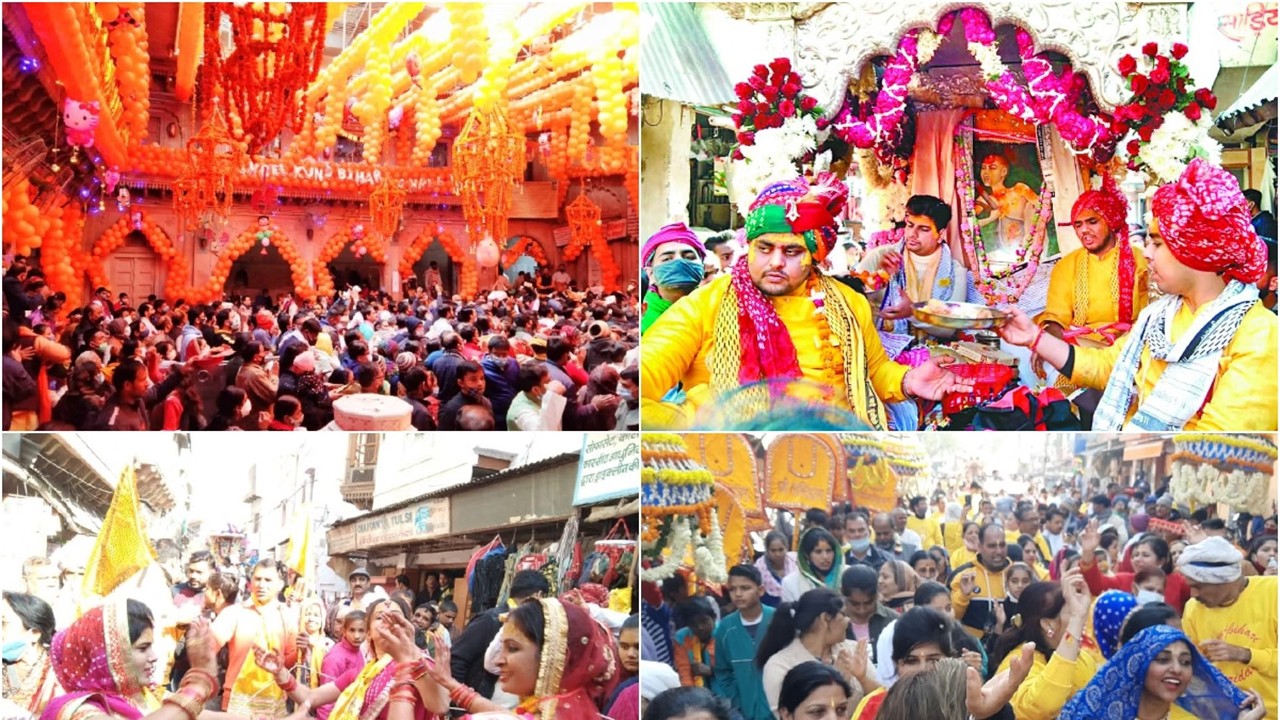
- A grand procession (shobha yatra) moves from Nidhivan to the Banke Bihari Temple, with elephants, band music, and kirtan troupes.
- The parade is led by chariots carrying images of Swami Haridas, Vitthal Devji, and Goswami Jagannathji Maharaj, symbolizing spiritual lineage.
- At noon, a Rajbhog Aarti is held, and 56 bhog items are offered. Prasād is then distributed to devotees.






Leave a Reply