
Flowing from the sacred Brahmagiri hills to the Bay of Bengal, the River Kaveri has nurtured some of the most revered Vaishnava temples in South India. Among them, five ancient temples dedicated to Sri Ranganatha, the reclining form of Sri Mahavishnu upon Adishesha, are collectively known as the Pancha Ranga Kshetras. The word Pancha means five, while Ranga refers to Sri Ranganatha, the Supreme deity resting in yogic repose.
The Pancha Ranga Kshetras occupy a special place in Sri Vaishnava tradition as a sacred chain of Ranganatha temples along the River Kaveri. Vaishnava traditions regard this yatra as equivalent to visiting a chain of heavenly Vaikuntha mandirs on earth, where the devotee experiences different manifestations of the same Ranganatha.
The five temples are 1. Adi Ranga (Srirangapatna), 2. Kasturi Ranga (Srirangam), 3. Appala Ranga (Tiruppernagar), 4. Sarangapani Temple (Kumbakonam), 5. Parimala Ranga (Mayiladuthurai), each preserving unique architecture and spiritual traditions. Among them, Srirangam, Koviladi, Kumbakonam and Mayiladuthurai are celebrated Divya Desams glorified in the Naalayira Divya Prabandham by the Alvars, while Srirangapatna completes the revered pilgrimage route.
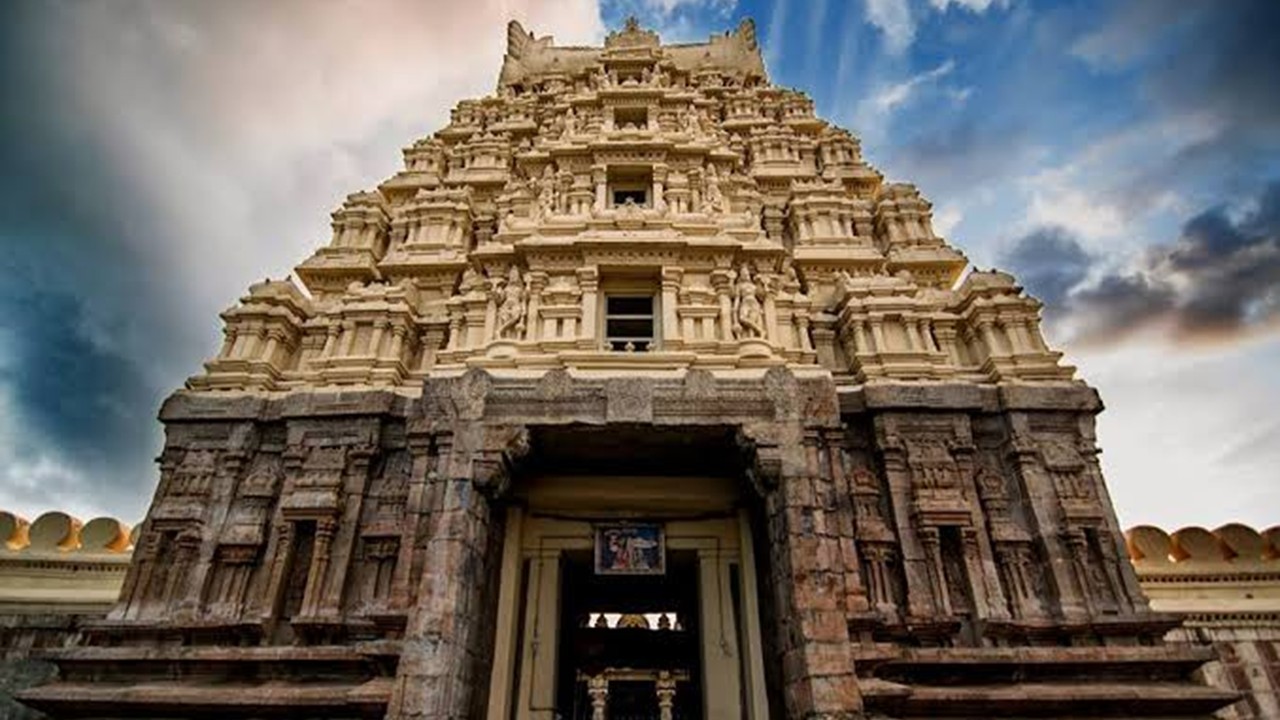
1. Adi Ranga, Srirangapatna, Karnataka
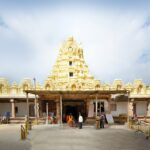
Located on an island formed by the Kaveri in Mandya District, the Sri Ranganathaswamy Temple at Srirangapatna is revered as the first of the Pancha Ranga Kshetras and is known as Adi Ranga. Tradition holds that Sage Gautama performed deep penance here to behold Sri Vishnu reclining on Adisesha. Pleased by his devotion, Sri Vishnu appeared in that form, making the site His earliest abode along the sacred river. River Kaveri is also believed to have prayed for Sri Vishnu’s presence, prompting His manifestation on her banks.
The present structure largely reflects Hoysala and Vijayanagara architectural influences. The temple is believed to have originated during the Western Ganga period, with references to an earlier sanctum dating to the 9th century. Over time, it received patronage from the Gangas, Hoysalas, Vijayanagara rulers, Mysore Wadeyars, Hyder Ali, and Tipu Sultan, reflecting its importance across religious and political boundaries.
The temple is a fine example of Dravidian architecture, distinguished by its five-tiered gopuram, spacious prakaras, and exquisitely carved Hoysala-style pillars in the navaranga mantapa. The presiding deity, a magnificent 4.5-meter-long reclining Sri Ranganatha resting on the seven-hooded Adishesha, is accompanied by Sri Lakshmi at His feet, while depictions of Sage Gautama and Devi Kaveri adorn the Garbha Griha. Festivals such as Vaikuntha Ekadashi, Brahmotsava, and Narasimha Jayanti attract thousands of devotees.
2. Kasturi Ranga, Srirangam, Tamil Nadu
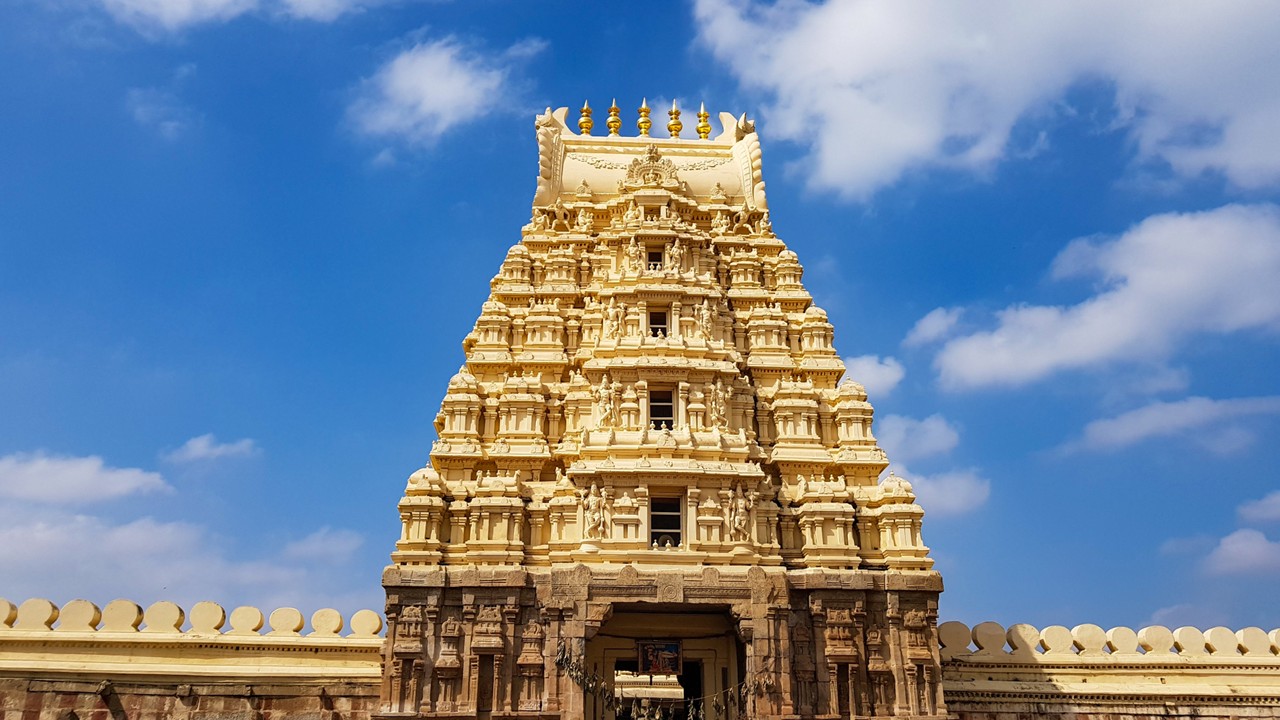
Situated on the sacred island of Srirangam, formed by the twin streams of the River Kaveri and Kollidam, the Sri Ranganathaswamy Temple is the most revered of the Pancha Ranga Kshetrams and the foremost temple of Sri Vaishnavism. Here, Sri Ranganatha reclines majestically on the serpent Adisesha, blessing devotees from His unique south-facing Garbha Griha. Sri Ranganayaki is situated on a separate altar within the temple campus.
According to ancient tradition, the divine deity of Ranganatha sculpted by Sri Vishwakarma, was first worshipped by Brahma in Satyaloka. After centuries of penance, King Ikshvaku brought the deity to Ayodhya, where it was worshipped by the Solar Dynasty. The deity eventually came into the possession of Sri Rama, who, after the victory over Ravana, gifted it to the devoted Vibhishana, king of Lanka. On his journey south, Vibhishana stopped at the banks of the Kaveri at Srirangam. When he placed the deity on the ground to take bath, Sri Ranganatha chose to remain there permanently. To console His devotee, Ranganatha turned southward, eternally blessing Vibhishana and Lanka. The temple is also associated with Andal, who attained mystical union with Ranganatha here, and Thondaradippodi Alvar, whose life was transformed by the Lord’s grace.
Architecturally, Srirangam is the largest functioning temple complex in the world. Spread across as a vast city, it features seven concentric prakaras, 21 gopurams, magnificent pillared halls, and the famous 1,000-pillared mandapam. The towering Rajagopuram, rising to 236 feet, dominates the skyline. Intricate sculptures, sacred tanks, grand corridors, and the temple’s conch-shaped island setting make it a masterpiece of Dravidian architecture. Every year, the grand Vaikuntha Ekadashi festival draws millions of devotees, reaffirming Srirangam’s status as the spiritual heart of Sri Vaishnavism in the Pancha Ranga pilgrimage.
3. Appala Ranga, Tiruppernagar, Tamil Nadu
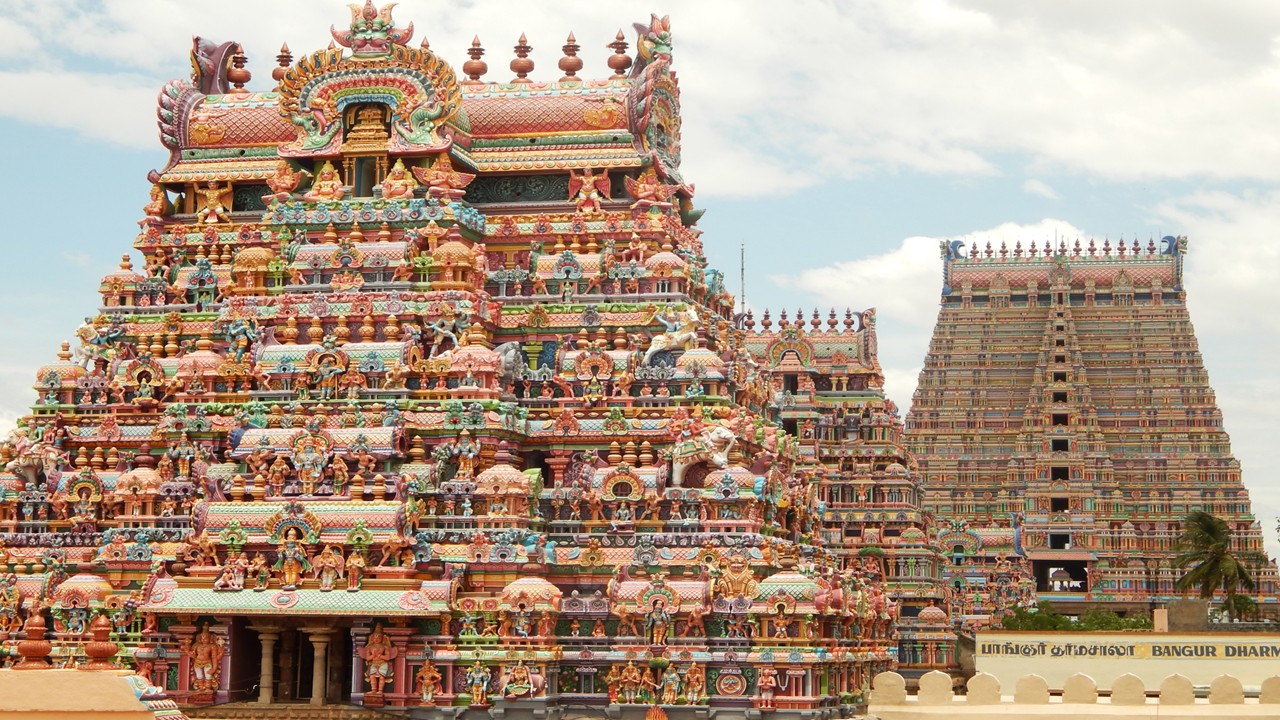
Situated near Tiruppernagar on the banks of the River Kaveri, Appakkudathan Perumal Temple at Koviladi is revered as Appala Ranga. One of the 108 Divya Desams, it holds special significance in Sri Vaishnava tradition and is praised in the Naalayira Divya Prabandham, especially by Periyalvar, who celebrates the deity’s compassionate form. The temple is closely linked to King Upamanyu, who lost his strength after incurring Sage Durvasa’s wrath. As atonement, he was instructed to feed one lakh people each day. One day, Sri Vishnu appeared as a hungry old man and consumed all the food prepared for the gathering. When still unsatisfied, He asked for a pot, or kudam, filled with sweet Neyyappam. The king joyfully offered it and then realized the old man was Sri Vishnu Himself. Pleased by the king’s devotion and generosity, Sri Vishnu freed him from the curse and came to be worshipped as Appakkudathaan, “the Lord with the pot of appam.” The temple is also associated with Sage Markandeya, who is believed to have been freed here from Yama’s curse that he would die at the age of sixteen.
This Divya Desam is also celebrated in the hymns of Tirumangai Alvar, Thirumalisai Alvar, and Nammalvar, giving it an important place in Sri Vaishnava Sampradaya. The temple reflects classical Chola-period Dravidian architecture with later Nayak additions. Inscriptions from the reign of Aditya Chola are found here, while epigraphical records also span the periods of Rajaraja Chola I, Rajendra Chola I, and the Vijayanagara ruler Sadasiva Raya. The temple tank associated with this temple is called Mrithyu Vinasini Theertham, the tank that destroys death. Annual Brahmotsavam, Panguni festivals, and Vaikuntha Ekadashi are observed with great devotion and festive splendour.
4. Sarangapani Temple, Kumbakonam
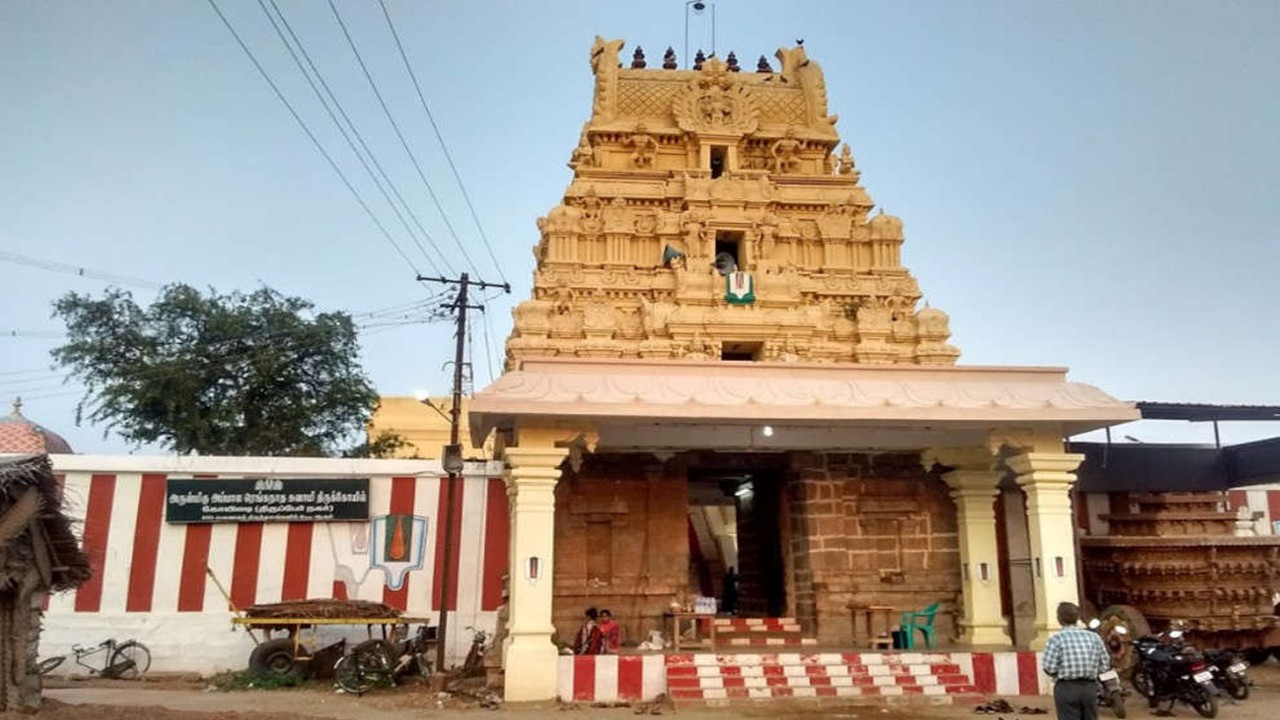
On the sacred banks of the Kaveri at Kumbakonam stands Sarangapani Temple, a celebrated Divya Desam and the fourth of the Pancha Ranga Kshetra. It is dedicated to Sri Vishnu as Sarangapani, “the Lord who holds the divine bow Sharanga.”
The temple history begins with Bhrigu Muni testing the Trimurtis. When he kicked Sri Vishnu’s chest, Sri Vishnu responded with humility rather than anger. Displeased by the insult, Lakshmi left Vaikuntha to perform penance on earth. Realizing his mistake, Bhrigu Muni sought forgiveness and prayed that Lakshmi be born as his daughter in a future life.
Reborn as Hema Rishi, Bhrigu Muni performed penance at Kumbakonam’s Potramarai Tank. Lakshmi appeared there as Komalavalli Nachiyar, his daughter. At Hema Rishi’s prayer, Sri Vishnu descended in a celestial chariot, married Komalavalli, and remained at Kumbakonam in the unique Uttana Sayanam posture as Aravamudhan, or Sarangapani.
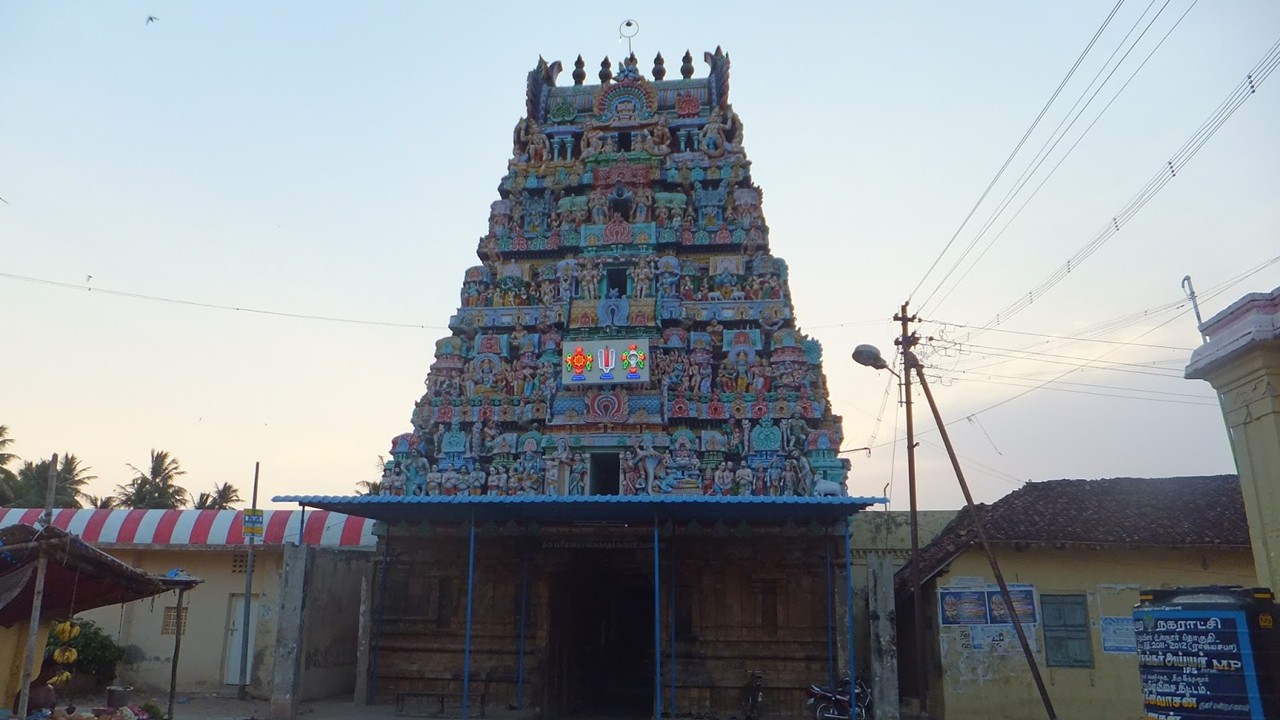
The temple is also linked to Sage Galava, whom Sri Vishnu is believed to have cured of leprosy after his sincere prayers. The Garbha Griha mirrors the divine chariot of the story, making it one of India’s most distinctive temple designs. Its 11-tiered, 173-foot Rajagopuram is the tallest among the Kumbakonam Divya Desams. The most important festival here is the Chithirai Brahmotsavam, commemorating the divine marriage of Sarangapani and Komalavalli Thayar. Other major festivals include Vaikuntha Ekadasi, Vasanthotsavam, Pavitrotsavam, and the Masi Float Festival, attracting thousands of devotees to Kumbakonam annually.
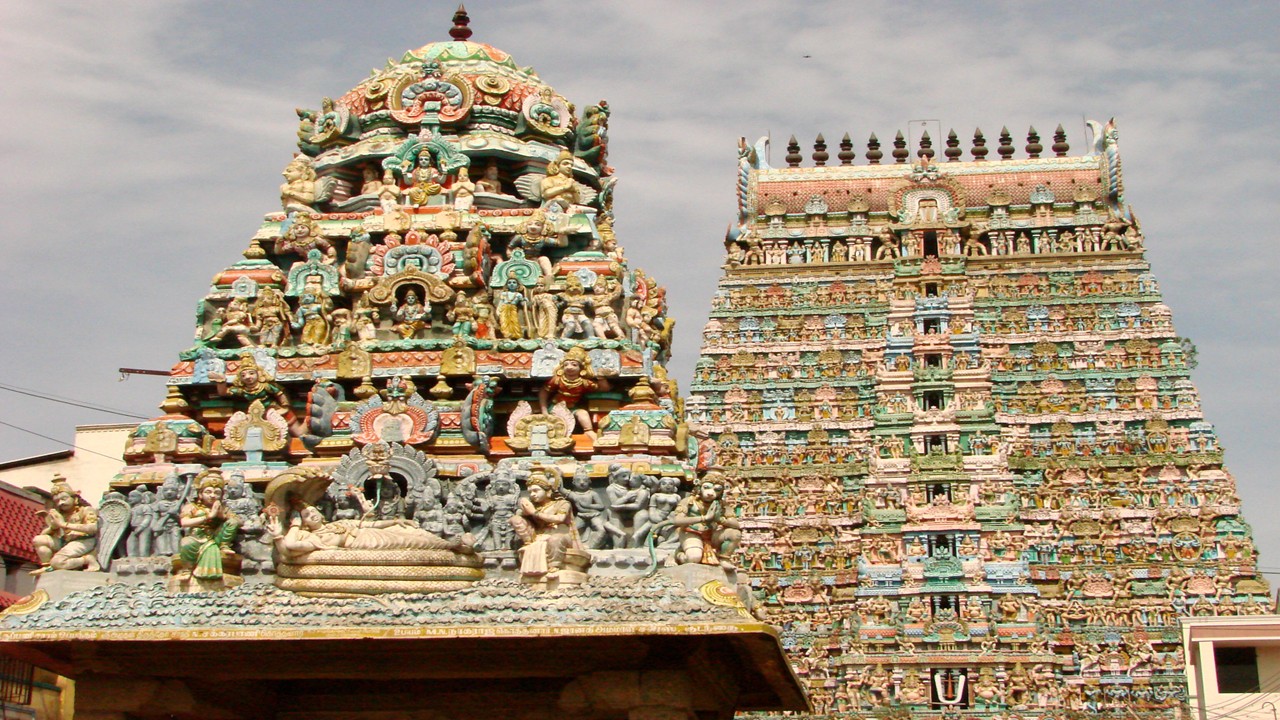
5. Parimala Ranganatha Perumal Temple, Mayiladuthurai
Parimala Ranganatha Perumal Temple, also known as Thiruindalur, is a revered Divya Desam located near Mayiladuthurai on the southern bank of River Kaveri. The temple is glorified in the Pasurams of Tirumangai Alvar and occupies a special place among the 108 Divya Desams. Over the centuries, the Cholas, Vijayanagara rulers, and Nayaks contributed to its architectural development and preservation.
The temple’s foremost leela relates to Sri Vishnu’s Matsya Avatara, during which He recovered the stolen Vedas from the demons Madhu and Kaitabha. After restoring them to Brahma, He infused them with a divine fragrance, earning the name Parimala Ranganatha, meaning “the Lord of Divine Fragrance.” Another important history tells of Chandra, the Moon God, who worshipped here to obtain relief from Daksha’s curse and regained his lost brilliance. Consequently, the temple is revered as a Chandra Dosha Parihara Sthalam.
Built in the traditional Dravidian style, the temple features a graceful gopuram, pillared halls, and a Garbha Griha housing the majestic deity Parimala Ranganatha in a reclining posture on Adisesha. The murti is sculpted from green stone, facing east and radiates serenity. Intricately carved pillars depicting episodes from Vedic literatures add to the temple’s artistic beauty. Today, the temple remains a vibrant pilgrimage center, celebrating festivals such as Vaikuntha Ekadashi and Navaratri, drawing devotees seeking the blessings of the fragrant Murti of Thiruindalur.
How to plan Panch Ranga Yatra?
The best way to plan is through Tirtha Yatra’s Pancha Ranga Yatra / Chola Nadu Divya Desham Yatra packages. All the arrangements for your Yatra will be taken care of which you focus only on the spiritual experience of the journey.
By Road: The Pancha Ranga temples are well connected by highways and can be covered on a pilgrimage circuit: Srirangapatna (Adi Ranga), Koviladi (Appala Ranga), Kumbakonam (Sarangapani), Mayiladuthurai (Parimala Ranga) and Srirangam (Antya Ranga).
By Rail: The nearest railway stations are Srirangapatna for Adi Ranga, Tiruchirappalli Junction for Appala Ranga and Antya Ranga, Kumbakonam Railway Station for Sarangapani Temple, and Mayiladuthurai Junction for Parimala Ranga.
By Air: The most convenient airports are Mysuru Airport and Kempegowda International Airport, Bengaluru for Adi Ranga, while Tiruchirappalli International Airport serves Appala Ranga, Sarangapani Temple, Parimala Ranga, and Antya Ranga.
0
Leave a Reply