
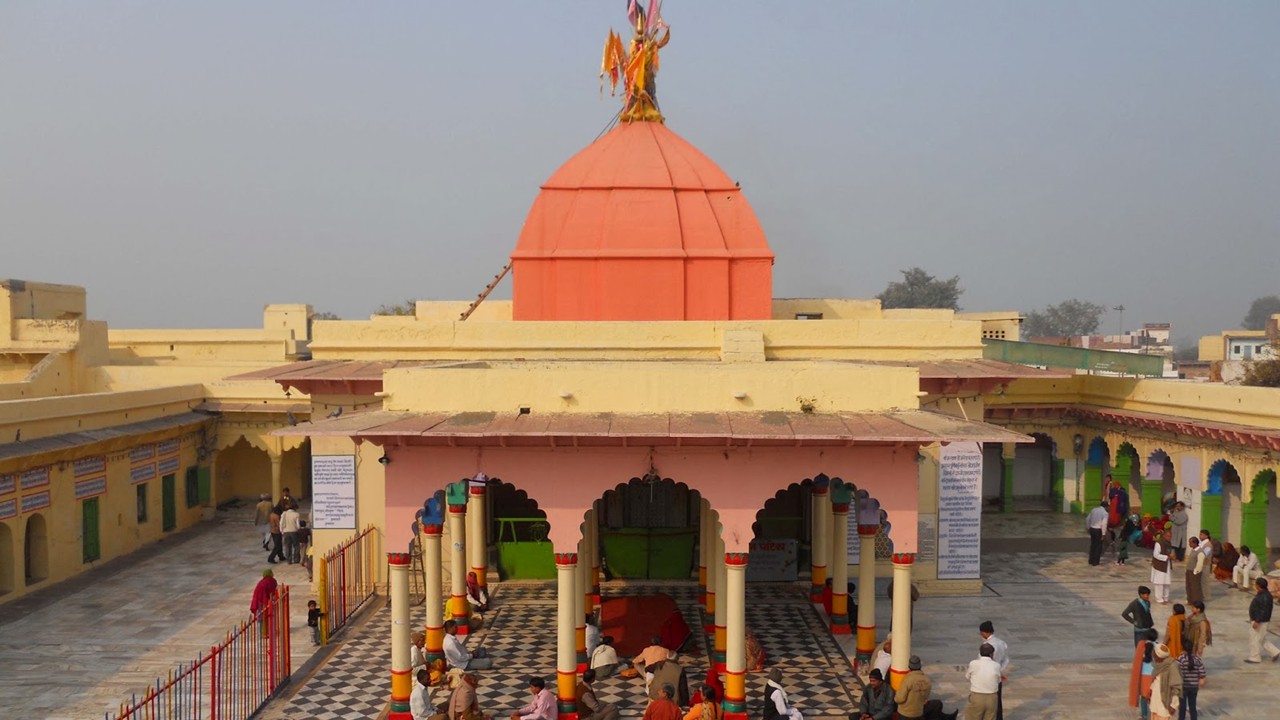
Baldeo Temple, also known as Shri Dauji Maharaj Temple, is one of the most revered temples in the Braj region. It is dedicated to Lord Balarama (Baladeva or Dauji), the elder brother of Lord Krishna, who is often regarded as the King of Vraja (Braj) because of his strength, protection, and leadership.
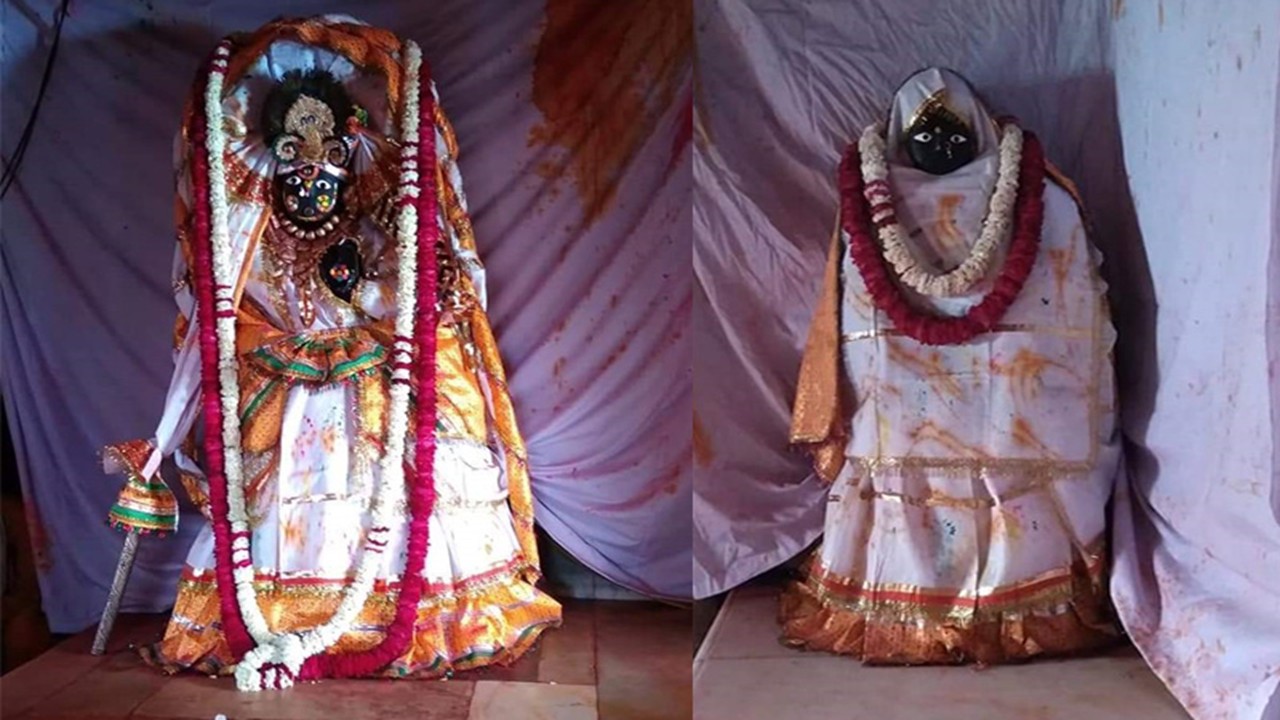
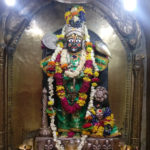
Situated about 21 kms from Mathura in Gokul, here one can see the largest and most famous Deity of Lord Balarama in the whole of Vraja and known affectionately as Dauji, which means Krishna’s elder brother. The Deity holds in His left hand a cup of Varuni-rasa which is Balarama’s favourite beverage. Slightly hidden to the side of Lord Balarama, is the Lord’s eternal consort Revati Devi, who is visible from just one side of the alter doorway, probably because this Deity was installed later sometime after the temple was built. The Deity of Dauji is almost seven feet tall and was installed by Vajranabha Maharaj, great grandson of Lord Sri Krishna.

Balarama is revered in the Bhagavata Purana as an incarnation of Shesha (Ananta), embodying strength, dharma, and spiritual power. He carries the plough (hala) and mace (gada), symbolizing protection and agriculture. According to Bhagavata Purana, Revati was the daughter of King Kakudmi. Following Brahma’s advice, Kakudmi offered her in marriage to Balarama. Varuni is the goddess of divine nectar (Varuni-rasa) and daughter of Varuna. She emerged from a tree and offered her celestial beverage to Balarama, who accepted it and enjoyed her worship and service.
It is said that once Balarama (Dauji), while herding cows at this place Mahavana showed His original form as the Supreme Personality of Godhead to the cowherd boys, therefore Vajranabha established the deity of Dauji here as the presiding Deity of the eastern petal of the lotus of Vraja mandala. Sometimes Dauji is mentioned as being the presiding Deity of the southern petal, but this post is also credited to Lord Varaha, who resides at the southern-most tip of Vraja at Saukari-Vateshwara (Batasar).
Lord Balarama is also considered to be the presiding Deity over the forests on the eastern bank of the Yamuna River including: Bhadravana, Bhandiravana, Belvana, Lauhavana, and Mahavana. This temple of Dauji also marks the most southerly point of both the Vraja Mandala Parikrama and the Vraja Mandala Borderline-Parikrama. The town of Baldeo falls within the area of the Mahavana forest, however, according to the Puranas this is also one of the upavanas or sub-forests of Vraja, also known as Balabhadravana.
The Kshirasagara Kunda
At some point in history, the Deity of Dauji was lost and hidden during the dark period of the Greco-Bactrian, Saka and Kushan invasions of India that began around 150 BC. It is most likely that all the prominent deities of Vrindavana Dham were hidden in kundas or buried underground during this period including Govindaji, Gopinathaji and Madana Mohana deities.
During their rule, Mathura was converted into one of the most important places of Buddhist culture and learning in the whole of India. The Deity of Dauji had not yet been rediscovered during the time of Lord Chaitanya or the Six Goswamis but was discovered around 150 years later, lying at the bottom of an ancient kunda in the town of Baldev (Baldeo).
During the re-installation ceremony of the Deity, it is said that the residents poured milk from a hundred thousand cows into the kunda where Dauji was found, as an offering to the Deity. The kunda then became celebrated as Kshirasagara kunda, which means the kunda containing the “ocean of milk”. This same kunda is also called Sankarshana-kunda, which is another name of Lord Balarama.
The Invasions
For centuries, the sacred land of Braj – comprising Mathura, Vrindavan, Mahavana, Gokul, and the surrounding forests – has remained a vibrant centre of Vaishnava devotion despite repeated periods of political turmoil and foreign invasions. During ancient times, Mathura came under the rule of successive dynasties, including the Kushans, under whom the city emerged as an important centre of Buddhist culture and learning in the northern parts of India.
In later centuries, particularly during the decline of the Mughal Empire, the Braj region faced severe challenges from invading forces and episodes of religious persecution. The campaigns of rulers such as Aurangzeb and the incursions of Ahmad Shah Abdali brought widespread destruction to many temples and settlements across the region.
Yet, the spiritual traditions of Braj proved remarkably resilient. Guided by the unwavering faith of saints, devotees, and local communities, its sacred sites continued to flourish as centres of pilgrimage, worship, and remembrance of the divine pastimes of Sri Krishna and Balarama, preserving the religious and cultural heritage of Braj through the ages.
- Ahmed Shah Abdali: The Battle of Chaumuhan
The most devastating episode came in 1757, when Ahmad Shah Abdali, the Afghan ruler who had invaded northern India, marched towards the Braj region. The political situation was deeply divided. The Marathas and Jats were at odds with one another, while the Rohilla chief Najib Khan supported Abdali. Taking advantage of these divisions, Abdali sought to weaken the Jat and Maratha powers and plunder the wealthy and sacred cities of this region.
After the Afghan forces defeated the Jats near Chaumuhan, the road to Mathura was left open. In March 1757, Afghan troops entered Mathura, which was then largely undefended. The city witnessed terrible violence and widespread destruction. Temples were desecrated, houses were plundered and burned, and many inhabitants were killed. The devastation extended into the surrounding Braj region, including Vrindavan, where temples, ashrams and settlements suffered from the invasion.
After the devastation of Mathura, Abdali crossed the Yamuna and entered the region of Mahavana. His forces intended to proceed towards Gokul, another of the most sacred places associated with Lord Krishna. But here, the course of events changed. According to traditional accounts of the episode, the defence of Gokul was taken up by Naga sadhus—ascetic warriors who had renounced ordinary worldly life but were prepared to protect the sacred places of dharma. Thousands of these Naga ascetics, covered in sacred ash and armed for battle, gathered to resist the advancing Afghan forces.
The Nagas fought with extraordinary courage. They were not a conventional royal army defending a kingdom; they were renunciants who regarded the protection of Gokul and its sacred places as a religious duty. Their resistance inflicted heavy losses and prevented the Afghan army from conducting the destruction like in Mathura.
One of the most revered places associated with this tradition is the Shri Dauji Maharaj Temple at Baldeo. According to local Braj tradition, when Ahmad Shah Abdali’s forces threatened Gokul, Lord Balarama (Dauji Maharaj) intervened to protect the sacred land. Devotees believe that, by Dauji Maharaj’s divine grace, a devastating outbreak of cholera spread through the region and afflicted the invading army, while the fierce resistance of the Naga ascetics further weakened the advance. Seeing these events as a clear sign of the Lord’s protection, Abdali’s forces abandoned their march, and Gokul was miraculously spared the widespread destruction that befell Mathura and Vrindavan.
The events of 1757 therefore occupy a special place in the historical memory of Braj. Mathura and Vrindavan suffered devastating violence, while Gokul survived an impending assault. The courage attributed to the Naga sadhus became a symbol of the determination to protect the sacred places associated with Lord Krishna.
- Aurangzeb and The Naga Sadhus
According to local temple tradition, when Aurangzeb was carrying out campaigns against prominent Hindu temples in the Mathura–Braj region, his forces are said to have moved towards the prosperous Dauji Maharaj Temple at Baldeo. The temple’s devotees feared that the shrine and the deity of Lord Balarama (Dauji) would suffer the same fate as the other temples in the region.
The traditional story says that the advancing army encountered extraordinary obstacles. In one version, large swarms of bees and wasps attacked the soldiers and their horses, while local communities also resisted the army. The force was reportedly delayed to such an extent that it became associated with the famous Hindi expression “Nau din chale, adhai kos“, meaning “nine days to travel two and a half kilometres.”
According to Braj tradition, when hostile forces approached Baldeo, a fierce storm of thunder, lightning, and wind arose, preventing them from advancing toward the shrine. Devotees regard this as a manifestation of the divine protection of Shri Dauji Maharaj (Lord Balarama), who is believed to have chosen never to leave His beloved Vraja-Dhama. Unlike several celebrated deities of Braj that were relocated to Jaipur for safety during periods of persecution from Aurangzeb, Dauji Maharaj is said to have remained in Vraja, personally safeguarding His sacred abode. Tradition further holds that Aurangzeb’s attitude toward the temple eventually softened, allowing its worship to continue, with the Naqqarkhana (drum house) near the entrance standing as a reminder of later Mughal patronage.
Architecture
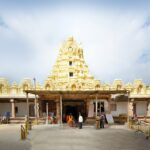
The Dauji Maharaj Temple, one of the most revered shrines associated with Lord Balarama, is believed to have a legacy spanning over 5,000 years. The present structure is attributed to Seth Shyam Dasa, who rebuilt the temple in 1580 AD. A fascinating aspect of its history is its association with Mughal emperor Aurangzeb, who is said to have donated five villages and 580 acres of land in the name of Dauji Maharaj. Inscriptions within the temple complex also suggest that he commissioned the construction of the Shilah Naqqarkhana in 1729 AD.
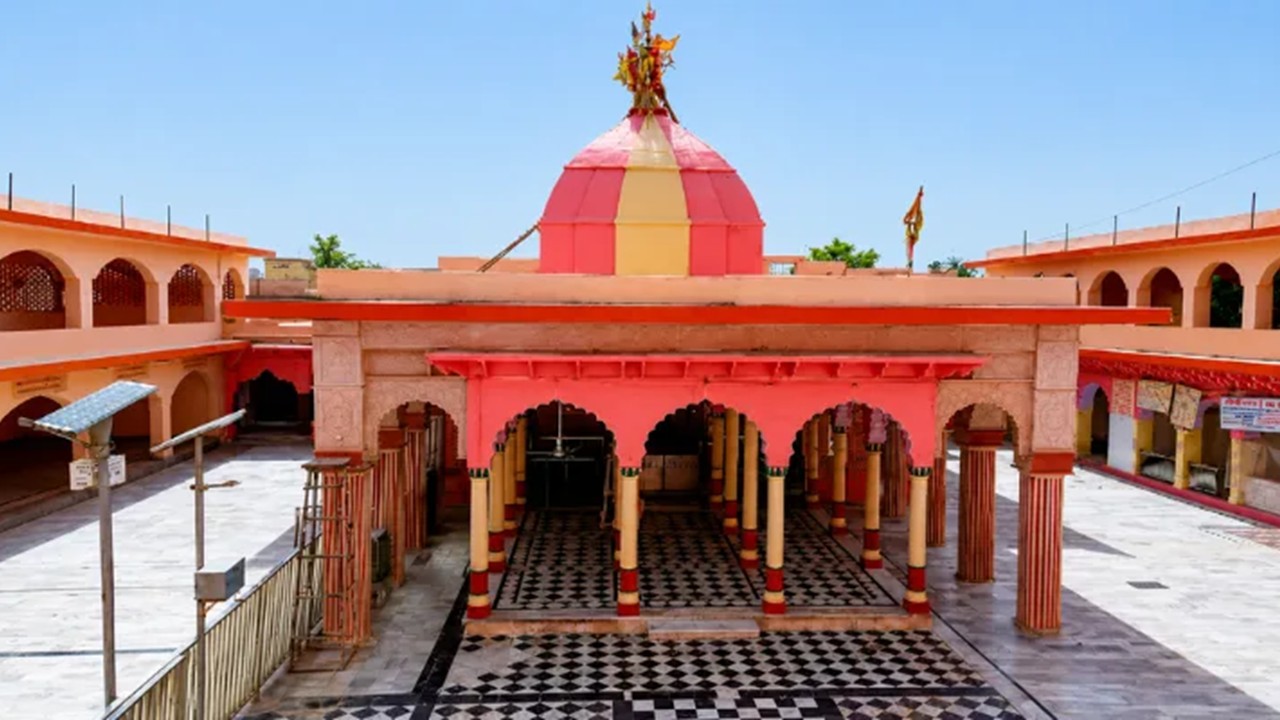
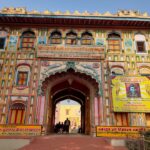
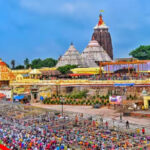
Deeply rooted in Hindu mythology, the temple reflects a distinctive Indian architectural style. It is accessible through four gateways—Singhchaur Gate, Janani Deodhi Gate, Goshala Gate, and Badvale Gate. The pre-Kushan-style sanctum, set within a defensive pavilion, houses an impressive deity of Lord Baladeva (Balarama), standing about eight feet high and three-and-a-half feet wide in the dancing posture of Shyam-Varshi.
Behind the deity, seven pale idols of Sheshnag form a protective canopy. The sanctum also enshrines a life-sized statue of Revati, Balarama’s consort. The temple complex further includes sacred courtyards known as Kunjas, a vaulted chamber associated with the deity’s manifestation, and the historic Kshirasagara Kunda, a brick-built tank covering approximately eighty square yards.
Festivals at Baldeo
Baldeo is renowned for its vibrant religious celebrations, making it one of the most important pilgrimage centres in the Braj region and a significant seat of the Vallabha Sampradaya of Mathura. The most famous festival is Huranga, a unique and colourful Holi tradition celebrated exclusively at Dauji Temple, Phoolon wali Holi is as well celebrated during the month of Phalguna, where age-old village customs come alive in a joyous display of colours and devotion.
Another major event is the Baldev Chet Mela, observed around Margashirsha Purnima (December) to commemorate the appearance of Lord Balarama. The festival attracts thousands of devotees from across Vraj. Balarama Jayanti, celebrated on Shravana Purnima (August), features grand abhishekam (kalasha snan) ceremonies, devotional sankirtan, and prayers honouring the spiritual strength of Lord Balarama.
Other important celebrations include Janmashtami, when the temple is illuminated in honour of Lord Krishna’s birth, and Annakoot, during which hundreds of food offerings are presented to the deity, reflecting the deep devotion and rich cultural traditions of Braj. Makhan Mishri (sweetened condensed milk with nuts) and Burfi (a dense milk-based fudge) are offered as bhog (sacred food offering) for the pleasure of Dauji Ji, along with flowers in this revered temple.
0
Leave a Reply