
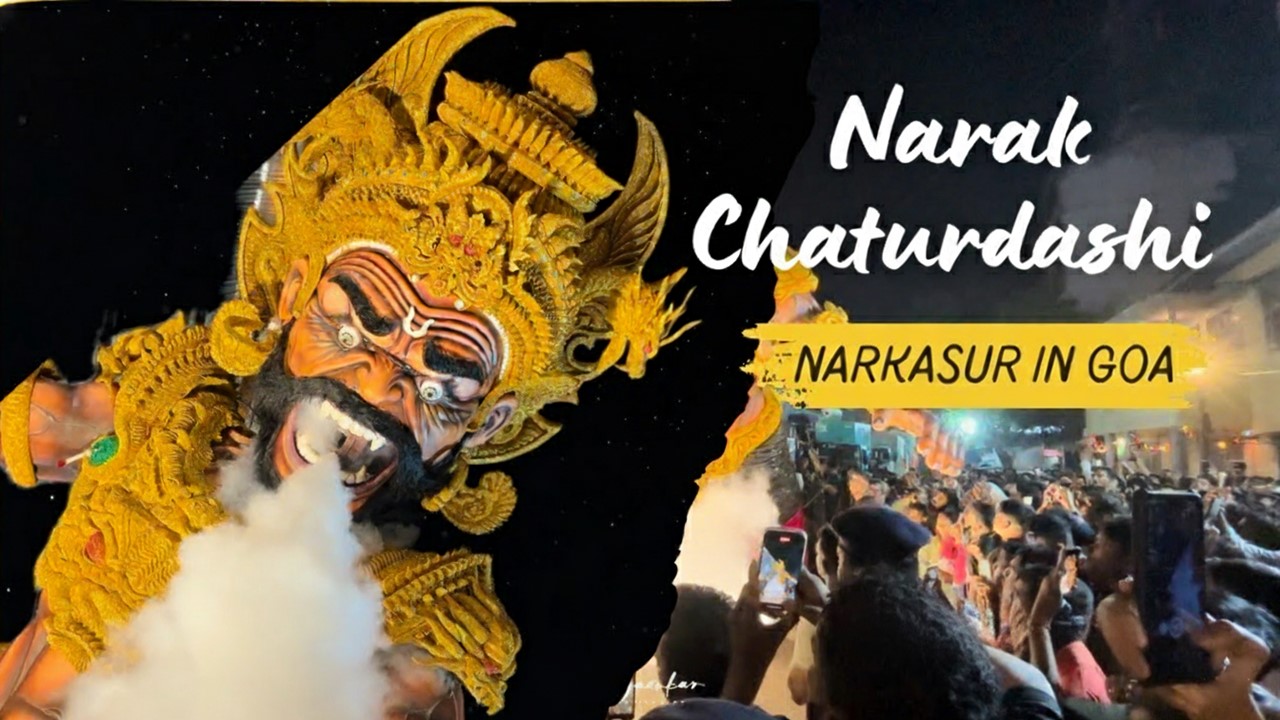
In the coastal state of Goa, it is celebrated one day before the actual Deepavali, known as Choti Diwali.
This year, Diwali in Goa is celebrated on 20th October 2025.
In Goa, Naraka Chaturdashi is a vibrant and unique festival. This traditional festival is celebrated by burning the effigies of the demon Narakasura, who captured the women.
Naraka Chaturdashi is celebrated to commemorate how Lord Sri Krishna saved the people by killing the Demon King Narakasura. It signifies the victory of good over evil.
Story of Narakasura Vadha
He captivated thousands of women and troubled them. Unable to bear the adverse circumstances and seeking liberation from this tyrannical rule, his subjects started praying to Lord Sri Krishna to relieve them from this pathetic situation.
Answering their prayer, Lord Sri Krishna appeared on the land where Narakasura ruled, on the Thrayodashi night of this month. A fierce battle broke out between them. Lord Sri Krishna, using His Sudarshana Chakra, killed the demon Narakasura on Chaturdashi. Lord Sri Krishna released all the women from the captivity of the demon and established dharma, peace, and prosperity in the land ruled by Narakasura.
Rituals Celebrated in Goa during Naraka Chaturdashi
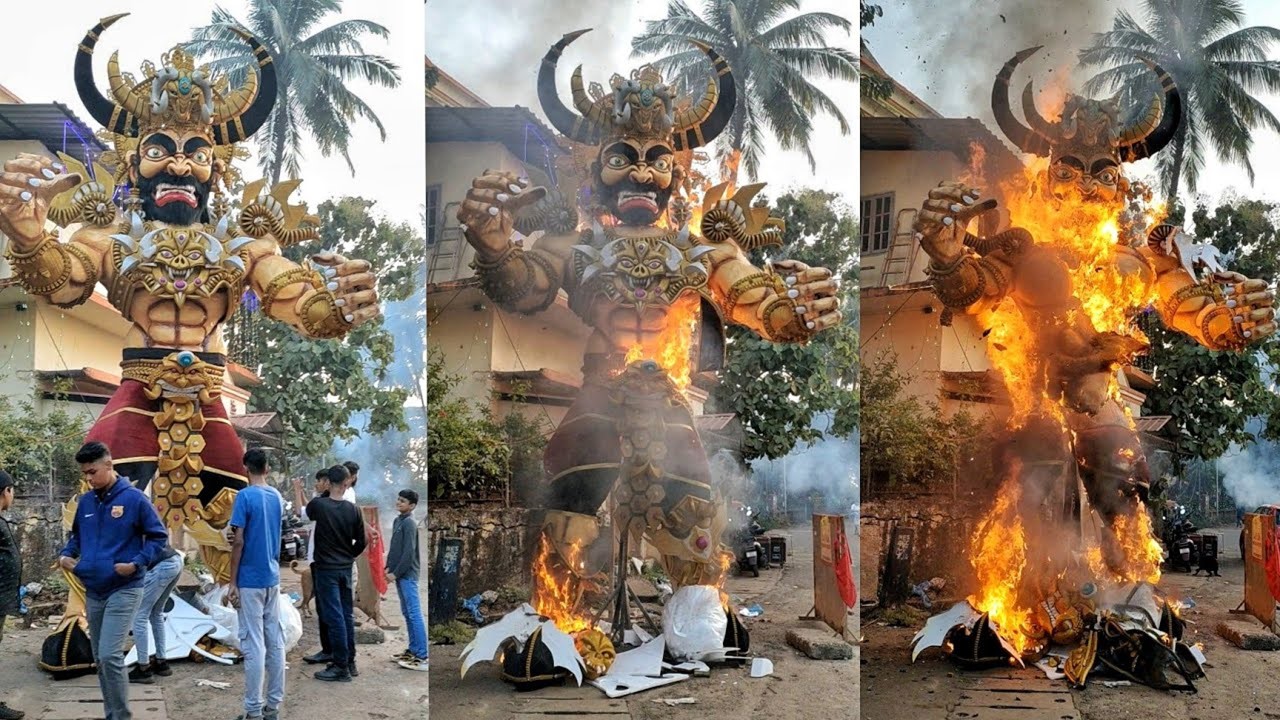
Burning of Fearsome Effigies of Narakasura
The youths of Goa begin with the preparation of large-sized effigies of Narakasura immediately after the Ganesha Chaturthi.
In regions like Devbag in South Goa, the making of monstrous effigies of Narakasura is very prominent. Even small children participate in large numbers in making these effigies.
Youths make tall and gigantic effigies of Narakasura with terrifying expressions, the size of a two-storey building.
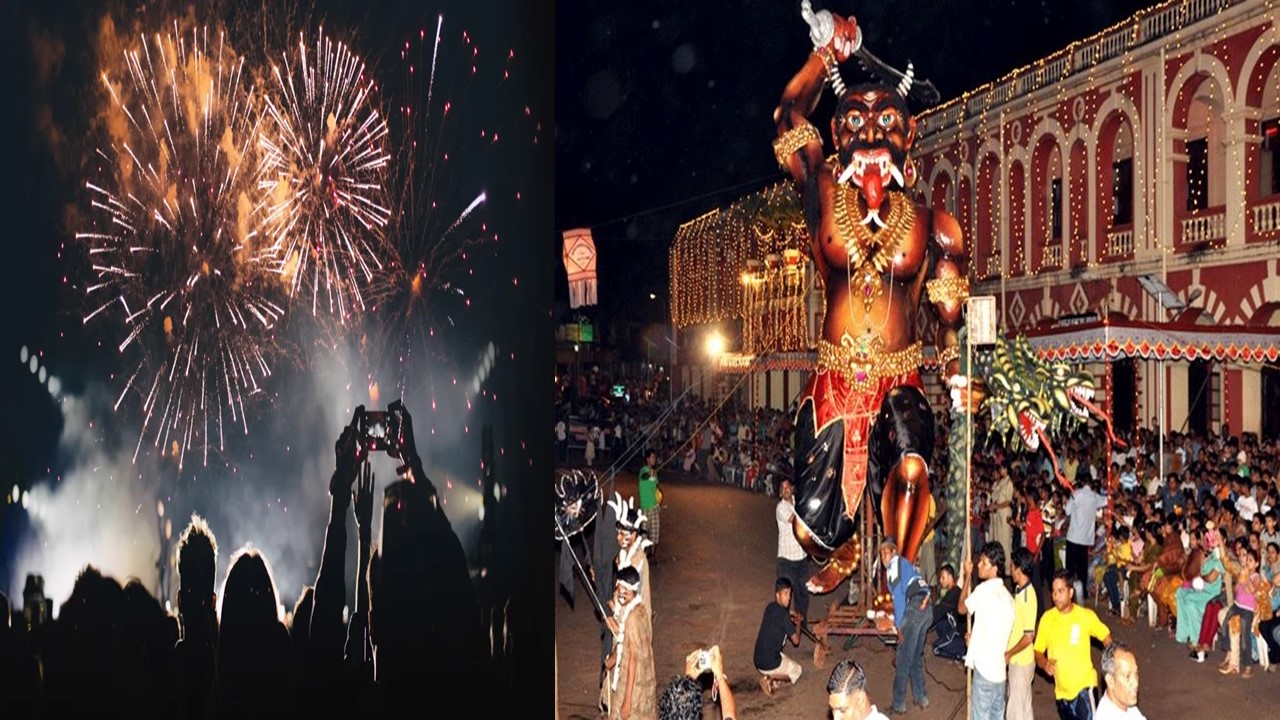
As dusk arrives, these gigantic effigies are paraded in the streets accompanied by music, beats of drums, and songs. These high-spirited parades increase the spiritual vibe of the place.
The very next day, before the sun rises, the effigies of Narakasura are burned, symbolizing the end of the evil spirit.
Also, in many big cities and towns, the making of different styles of effigies is considered a competition, and the reward is given to the best creator.
Abhyangsnan: An Oil Bath
Another important ritual in celebrating Naraka Chaturdashi is the oil bath. All the members of the family wake up early before sunrise, smear different kinds of fragrant oils and herbs all over their bodies, and take a bath to cleanse their bodies.
After the early morning bath, they offer their prayers to Giridhar Gopala and Lakshmi Devi by lighting a diya. They also offer different kinds of freshly-scented flowers, tulsi leaves, inviting wealth, happiness, and peace into their house.
Why do Goans Crush Karit Fruit?
After crushing the fruit underfoot, aarti is performed, followed by having breakfast.
Karit fruit is a small, cucumber-like fruit that tastes bitter, which is found mostly in different regions of Maharashtra and Goa. When this fruit is crushed underfoot, it crushes away all the negativity, grief, loss, and misfortune.
This tradition is being followed in different parts of Maharashtra, Goa, and even in some parts of Karnataka.
Why Poha Is a Diwali Staple in Goa?
Poha is prepared during Diwali as part of bringing success and prosperity into one’s life. It traces back to the story of Kuchela offering Poha to Lord Sri Krishna, when he visited Dwaraka, to meet his dear childhood friend.
Lord Sri Krishna accepted the gift given by His dear friend and granted him all the worldly blessings.
As a part of remembering Sri Krishna and His divine lilas, Pohas is prepared in each and every house of Goa. They feast together, strengthening family bonds.
Each variety of fov gives you a different blend of taste and flavour, enjoying the festival spirit.
- Kalayle Fov: It is a simple Goan dish prepared by mixing Poha, grated coconut, and jaggery.
- Doodhantle Fov: It is a sweet dish prepared by soaking Poha in warm milk. A little sugar and cardamom are added to add sweetness. Also, it is garnished with dried fruit and nuts. This creamy dish is a tasty breakfast for Goans.
- Curd or Buttermilk Fov: Poha is mixed with curd or buttermilk to bring coolness to the body and also seasoned with mustard seeds and green chilies to increase the tanginess.
- Batata Fov: It is a Goan breakfast prepared with Poha, potatoes, spices, and curry leaves. It is eaten as breakfast or an evening snack.
- Rosantle Fov: It is a Goan sweet Porridge prepared using Poha and boiled in coconut milk and jaggery. Turmeric leaf is also added to increase the flavour.
Lighting of Earthen Diyas in the Evening
The auspicious burning of diyas and bursting crackers drives away the evil spirit and brings home positive energy. Also prepares the house for welcoming Diwali’s Lakshmi, the goddess of good fortune, prosperity, and happiness.
How Naraka Chaturdashi is Celebrated in Different Parts of Goa
North Goa: In regions like Mapusa and Panaji, large public crowds gather to witness the burning of effigies of Narakasura. Local clubs organize competitions for the most creative, gigantic effigies of Narakasura.
South Goa: In the southern part of Goa, regions like Margao and Vasco da Gama, the celebration is rooted in community traditions, such as Abhyang Snana and the lighting of diyas. Only small effigies and local temple rituals are followed.
Leave a Reply